

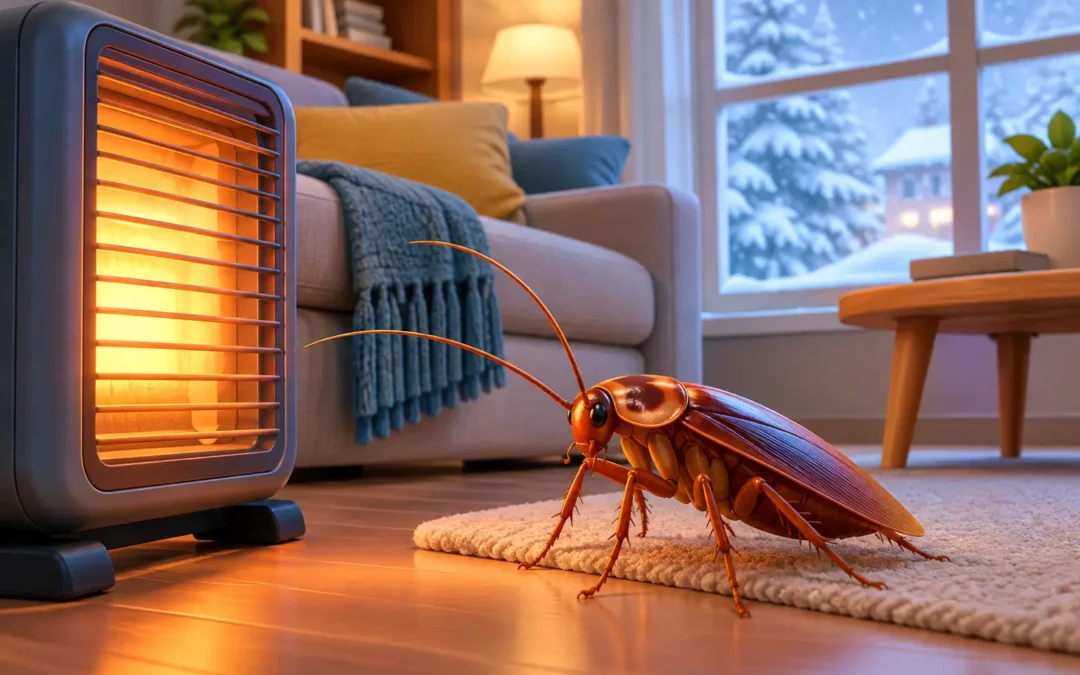
A cockroach seen in January is not a pest that wandered in to escape the cold. It is often evidence that roaches are already living, feeding, and breeding somewhere inside the building. Can cockroaches survive winter indoors? Yes. In a heated home, apartment, restaurant, or office, winter barely slows them down.
That can be frustrating for homeowners who expect freezing outdoor temperatures to solve the problem. Cold weather may reduce outdoor cockroach activity, but indoor conditions provide everything a roach needs: warmth, moisture, food, and tight hiding spaces. Waiting for spring is not a solution. It gives a small infestation time to become a larger one.
Why Cockroaches Stay Active Indoors During Winter
Cockroaches are cold-blooded insects. Their activity drops when temperatures fall, and prolonged freezing conditions can kill many species outdoors. But the temperature inside most occupied buildings stays well within the range that allows cockroaches to move, eat, and reproduce.
A warm kitchen cabinet beside a dishwasher can be more comfortable for a cockroach than an outdoor summer hiding place. Areas behind refrigerators, under sinks, around water heaters, in utility rooms, and near boiler pipes stay especially warm. In multi-unit buildings, roaches can also travel through shared walls, plumbing openings, electrical lines, and floor drains from neighboring units.
German cockroaches are the most common indoor problem. They do not handle cold well outdoors, so they depend heavily on human structures for survival. If German roaches are present in winter, the source is usually inside the property or very close to it. American cockroaches and Oriental cockroaches may enter from basements, drains, garages, or utility areas, particularly where there is moisture.
Can Cockroaches Survive Winter Indoors Without Much Food?
They can survive longer than most people expect. Cockroaches need access to water more urgently than they need a full food source. A dripping pipe, condensation beneath a refrigerator, pet water, or dampness under a sink can keep them alive. They may feed on crumbs, grease buildup, cardboard glue, garbage residue, spilled pet food, and even small bits of organic material in drains.
That is why a clean home can still have roaches. Good sanitation reduces food and hiding opportunities, but it does not always eliminate a colony already established behind cabinets or inside wall voids. In apartments and commercial properties, the problem may also originate elsewhere in the building.
Winter can make an infestation harder to notice at first. People spend more time indoors but may see fewer insects because roaches remain tucked into warm, protected spaces. Then activity becomes obvious when a cabinet is opened at night, a light is switched on in the kitchen, or droppings begin appearing near food storage areas.
Signs You Have a Winter Cockroach Problem
One live cockroach should be taken seriously, especially if it is a small tan or brown German cockroach with two dark lines behind its head. This species reproduces quickly, and seeing one during the day can point to a crowded hiding area nearby.
Look for pepper-like dark droppings in cabinet corners, under appliances, along baseboards, and around plumbing. You may also find shed skins, small brown egg cases, or an unpleasant musty odor in areas with heavy activity. Roaches prefer to stay close to food and water, so kitchens, bathrooms, laundry rooms, break rooms, and storage areas deserve the closest inspection.
In commercial spaces, cockroaches can become a health and reputation issue quickly. A single sighting in a restaurant, retail location, office kitchen, or rental unit can lead to complaints and lost trust. Fast professional inspection is usually less costly than allowing the infestation to spread.
Why Winter Roach Infestations Can Get Worse
Winter does not automatically stop reproduction. If indoor temperatures remain comfortable and resources are available, cockroach populations can continue growing. German cockroaches reproduce particularly fast, with females carrying egg cases that can produce dozens of young roaches.
The problem is often more concentrated during cold months. Instead of moving between outdoor and indoor areas, roaches stay close to heated zones. A colony may build behind a refrigerator motor, inside a cabinet void, or under a bathroom vanity where homeowners rarely look. By the time roaches appear in open areas, there may already be many more hidden from view.
DIY sprays can make this worse when used incorrectly. A strong-smelling aerosol may kill a few visible roaches but drive others deeper into cracks, walls, or adjoining units. It can also interfere with bait treatments, which rely on roaches feeding and returning to the colony. Store-bought products have a place for limited situations, but a recurring or widespread problem needs a more targeted plan.
What You Can Do Right Away
Start by reducing the conditions that support cockroaches. Wipe counters and stovetops after use, store food in sealed containers, take out garbage regularly, and avoid leaving pet food out overnight. Vacuum crumbs from cabinet edges, beneath appliances, and along baseboards. Cardboard boxes can provide excellent shelter, so remove unnecessary stacks from kitchens, basements, and utility rooms.
Next, focus on moisture. Repair leaks, dry the sink area before bed, and check under appliances for standing water. Seal obvious gaps around pipes, baseboards, and cabinet openings once the active treatment plan is underway. In apartment buildings, report sightings immediately to management because successful control may require inspection of nearby units.
Avoid placing random foggers or bug bombs around the home. They rarely reach roaches hiding in walls and appliance voids, and they can spread the insects into new areas. Do not spray over bait placements. If you have used products already, tell the pest control technician exactly what was applied and where.
When Professional Cockroach Treatment Is the Smart Move
Professional help is recommended if you see roaches more than once, find droppings or egg cases, spot them during daylight, or live in a multi-unit property. These signs often mean the problem is established rather than incidental.
Effective cockroach control is not one quick spray. It begins with identifying the species, locating harborages, and understanding how the insects are moving through the building. A trained technician can use an integrated approach that may include targeted baiting, crack-and-crevice treatment, monitoring, sanitation guidance, and follow-up visits. The right method depends on the species, the size of the infestation, the layout of the property, and whether children, pets, tenants, or food operations are involved.
Super Pest Control has completed more than ten thousand cockroach treatments and provides practical treatment plans for homes and businesses that need fast relief. Experienced service matters because winter roach activity often hides behind surfaces that a homeowner cannot safely or effectively treat alone.
Stop Roaches Before They Settle In for Winter
Do not assume a cold forecast will remove cockroaches from your home. If you are seeing them indoors, treat the sighting as a reason to investigate now, while the infestation may still be contained. A prompt inspection and a targeted treatment plan can protect your kitchen, your property, and your peace of mind through the rest of the winter.