

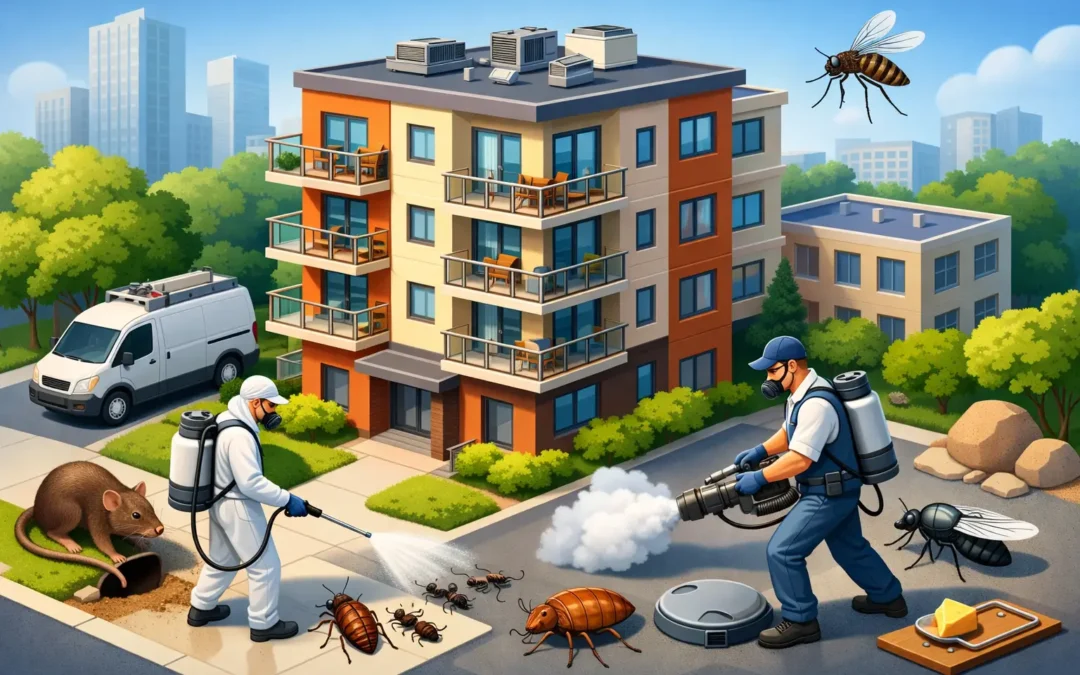
A single cockroach sighting in a hallway can become a building-wide problem faster than most property managers expect. The best pest control for apartment buildings is not a one-time spray in the unit that complained. It is a fast, coordinated plan that finds the source, treats affected areas, protects neighboring units, and stops pests from returning.
Apartment pest problems are different from single-family home problems. Shared walls, utility lines, trash rooms, laundry areas, storage lockers, and frequent move-ins give pests multiple ways to spread. Fast action protects tenants, avoids repeated complaints, and helps prevent a small issue from becoming an expensive vacancy or reputation problem.
What Makes Pest Control Work in Apartment Buildings?
Effective apartment pest control starts with a complete inspection. A technician should not focus only on the tenant’s kitchen or bedroom. They should inspect connected units, common areas, plumbing penetrations, garbage locations, utility rooms, and any place where moisture, food debris, clutter, or gaps create shelter.
The right treatment depends on the pest. Bed bugs need a different approach than roaches, rats, ants, or flies. Treating every problem with the same product wastes time and can push pests deeper into walls, adjacent units, or concealed areas.
A reliable plan combines targeted treatment with Integrated Pest Management. That means removing the conditions pests need to survive while using the least disruptive effective treatment. In a multi-unit building, this may include bait placement, crack-and-crevice applications, monitoring devices, exclusion work, sanitation recommendations, and scheduled follow-up visits.
The goal is not simply fewer sightings for a few days. The goal is to break the infestation cycle.
Best Pest Control for Apartment Buildings: A Building-Wide Plan
The most effective programs have clear responsibilities for the property manager, maintenance team, tenants, and pest control provider. When one part is missing, treatment may fail even when the products used are effective.
Start With a Fast, Accurate Inspection
Speed matters, but guessing costs more. A qualified technician should identify the pest before recommending treatment. Roach droppings, bed bug evidence, rodent rub marks, fly breeding sites, and ant trails all point to different causes and require different control methods.
For recurring complaints, ask for an inspection that includes the units above, below, and beside the affected apartment when appropriate. Pests commonly travel through wall voids, pipe chases, vents, and shared electrical openings. Treating only the reporting unit can leave the true source untouched.
Documenting findings also helps managers track patterns. If the same stack of units keeps reporting roaches, for example, the issue may be a plumbing gap or sanitation concern in a shared area rather than a problem caused by one resident.
Use Targeted Treatments, Not Blanket Spraying
Broad spray-only treatments are rarely the best answer for apartments. They may provide short-term relief, but they do not always reach harborages or eggs. They can also disrupt a tenant’s routine without resolving the root problem.
For cockroaches, professional baiting, insect growth regulators, targeted crack-and-crevice treatment, and follow-up inspections often deliver better long-term control. Roaches hide behind appliances, under sinks, inside cabinet voids, and around plumbing. The treatment needs to reach these areas safely and strategically.
Bed bugs require even more precision. A successful program may involve detailed inspection, treatment of beds and furniture, carefully selected applications in cracks and crevices, mattress encasements where needed, and follow-up service. Tenants need clear preparation instructions, but they should not be told to throw out everything they own or use store-bought foggers. Those actions can spread bed bugs and make professional treatment harder.
Rodents need exclusion as well as removal. Trapping alone will not solve a mouse or rat problem if gaps around pipes, doors, foundation openings, and utility lines remain open. In apartment buildings, the exterior, trash area, basement, and mechanical rooms are often just as important as individual units.
Treat Common Areas and Entry Points
Pests do not respect lease lines. Hallways, laundry rooms, garbage chutes, recycling areas, storage rooms, kitchens, break rooms, and loading areas can support an infestation or allow it to spread.
A strong program includes these shared spaces in regular inspections. Garbage should be removed on schedule, bins should remain closed, spills should be cleaned quickly, and cardboard should not accumulate in storage areas. Maintenance teams should seal gaps around plumbing and repair leaking pipes, damaged door sweeps, and broken screens.
Moisture control is especially important for roaches, centipedes, and ants. A persistent leak under a sink or behind a wall can attract pests even in otherwise clean units. Addressing that leak can make treatment more effective and reduce the chance of repeat service calls.
Tenant Cooperation Makes Treatment Stronger
Tenants should not be blamed for every pest issue. Pests can enter through deliveries, neighboring apartments, shared walls, visitors, and building infrastructure. Still, resident cooperation can make a major difference.
Property managers should provide simple, respectful instructions before service. Depending on the pest, tenants may need to clear under sinks, remove items from targeted cabinets, wash bedding, vacuum specific areas, or keep food in sealed containers. Instructions should be practical and specific. Vague notices create confusion, missed preparation, and delayed results.
Privacy and communication matter too. Give proper notice, explain what will happen during treatment, and tell residents what to expect afterward. Some pests may be more visible briefly after service as they leave hiding places. When tenants know this can happen, they are less likely to assume the treatment failed.
For bed bugs and roaches, coordinated access is often essential. If neighboring units cannot be inspected or treated when needed, pests may move away from the treated area and return later.
How Often Should an Apartment Building Receive Pest Service?
It depends on the building’s size, age, location, tenant turnover, pest history, and amenities. A newer, well-maintained building may only need periodic preventative inspections. A building with a history of roaches, rodents, or bed bugs may need scheduled monitoring and recurring service.
As a practical rule, managers should not wait for multiple complaints before calling. One confirmed bed bug case deserves immediate attention. Roach sightings in several units, rodent activity near trash areas, or repeated ant complaints should trigger a broader inspection.
Ongoing service is usually more cost-effective than emergency-only calls for high-risk properties. Regular monitoring catches activity early, while emergency treatments often involve more units, more preparation, and more disruption. The best plan balances cost with the building’s actual risk instead of selling unnecessary treatments.
Questions to Ask a Pest Control Company
Before hiring a provider, property managers should ask how the company handles multi-unit inspections, whether it treats connected units and common areas, and what follow-up is included. Ask for clear preparation instructions, treatment records, and recommendations for repairs or sanitation changes.
Experience with apartment-specific pests matters. Bed bugs, cockroaches, rats, mice, ants, and flies each require different knowledge. A provider should be able to explain the proposed approach in plain language, including why a second visit may be necessary and what results are realistic.
Price matters, but the cheapest first visit is not always the lowest total cost. A low-priced treatment that misses adjacent units or skips follow-up can lead to repeat infestations and more tenant complaints. Look for licensed, trained professionals who provide a clear scope of work and stand behind their service.
Protect Your Building Before the Next Complaint
The best time to build a pest management plan is before an infestation spreads. Keep service records, respond to tenant reports quickly, repair entry points, and schedule inspections in areas with recurring activity. This protects residents and gives property managers better control over costs.
For apartment buildings in Hamilton, Burlington, Grimsby, Stoney Creek, or Ancaster, Super Pest Control can provide fast inspections, targeted treatment, and practical prevention advice for urgent pest problems. A prompt professional assessment can turn a stressful complaint into a controlled, documented solution before pests take over more of the property.