

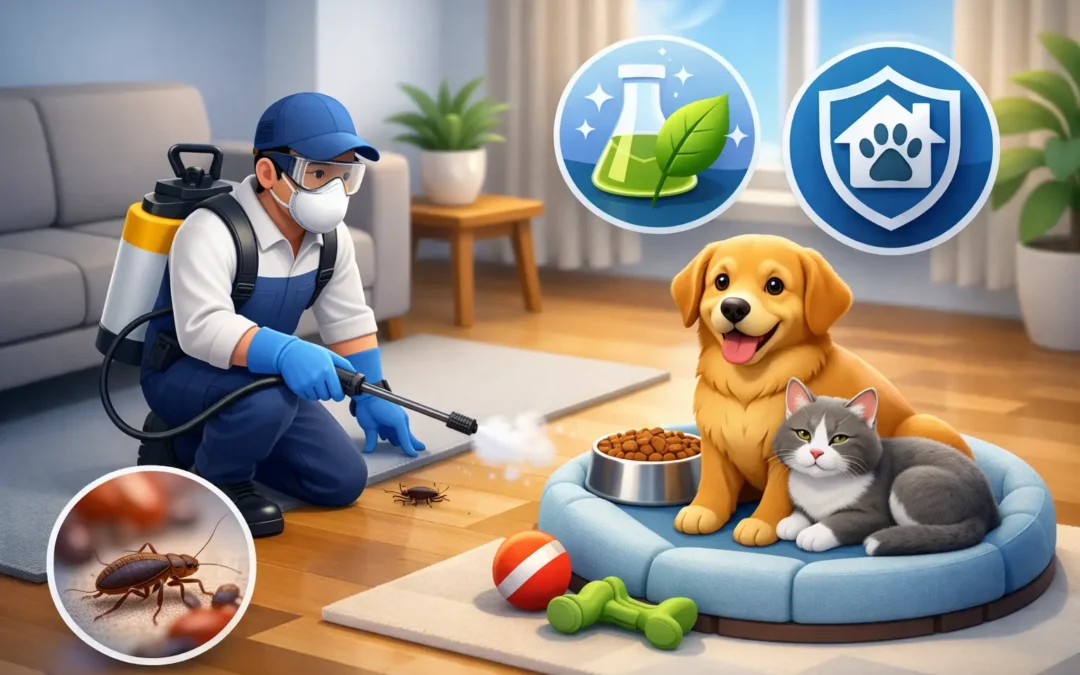
A dog licking a baseboard, a cat slipping behind the couch, or a curious puppy finding a bait station can turn a pest problem into a safety concern fast. So, are pest control treatments safe for pets? When the right product is applied correctly, in the right place, and with clear preparation instructions, professional treatment can be used safely around pets. The details matter, though. Pet safety is not a promise made by the label alone. It depends on the pest, the treatment method, your pet’s habits, and whether everyone follows the technician’s directions.
For homeowners dealing with roaches, bed bugs, ants, mice, fleas, or wasps, the goal is simple: remove the pest without creating a new problem for the animals in your home. A qualified pest control technician should explain exactly what is being used, where it will be applied, what to move or cover, and when pets can safely return to treated spaces.
Are Pest Control Treatments Safe for Pets When Applied Professionally?
Most modern professional pest control treatments are designed for targeted use, not broad, unnecessary spraying. That is a major difference. Integrated pest management focuses on inspection, exclusion, sanitation, monitoring, and precise treatments where pests hide or travel. Less exposure is usually better for both people and pets.
A treatment may involve a crack-and-crevice application behind appliances, a gel bait in an inaccessible area, a sealed rodent bait station outdoors, or a carefully placed dust in a wall void. These methods keep the product away from normal pet activity far better than a loose, over-the-counter spray used across floors and furniture.
Still, “pet-safe” does not mean a pet can touch, eat, or inhale any pest control product without risk. Even products with a lower toxicity profile can cause problems if a pet gets a concentrated dose. Dogs may chew stations, cats may walk through a wet application and groom their paws, and birds or fish can be especially sensitive to airborne products and residues.
The safest treatment is the one matched to the specific infestation and applied only where it is needed. That is why an inspection comes first. A cockroach issue in a kitchen needs a different approach than fleas in carpeting or rats in an attic.
What Determines the Risk to Your Pet?
The risk level comes down to four practical factors: the product, how it is applied, where it is applied, and your pet’s access to it.
A gel bait placed inside a cabinet hinge or behind a refrigerator has a very different exposure risk than a liquid treatment applied along an open floor edge. A secured rodent station is safer than loose poison. A treatment that has fully dried is generally less likely to transfer onto paws or fur than one that is still wet.
Your pet’s behavior matters just as much. A calm adult dog that stays off treated areas is not the same as a puppy that chews everything. Cats often reach tight spaces and groom themselves frequently. Rabbits, reptiles, birds, and aquarium fish require extra planning because they can be more sensitive to certain products, fumes, or particles.
Tell the technician about every animal in the home, including pets kept in cages, tanks, or separate rooms. Mention if your dog eats insects, if your cat hunts mice, or if your pet has a respiratory condition. This information helps the technician select and place treatment more safely.
Flea Treatments Need a Two-Part Plan
Fleas are one of the most common reasons pet owners worry about pest control. The concern is valid because fleas live on animals, but much of the infestation develops in carpets, upholstery, pet bedding, and floor cracks.
Treating only the home usually fails because fleas can continue reproducing on the pet. Treating only the pet often fails because eggs and developing fleas remain indoors. A complete plan typically combines a veterinarian-approved pet treatment with targeted home treatment, vacuuming, washing bedding, and follow-up as needed.
Never apply a home or yard pesticide directly to a pet unless the product specifically says it is made for that animal and you follow its directions. Dog products can be dangerous for cats, especially when they contain ingredients not approved for feline use.
Rodent Control Requires Extra Caution
Rodent problems create two risks for pets: access to rodenticide and contact with a poisoned rodent. Dogs may chew a bait station, while outdoor cats may catch a mouse that has consumed bait.
Professional rodent control should prioritize exclusion and trapping whenever practical. Closing entry points, removing food sources, and using traps in protected locations can reduce the need for bait. If rodenticide is necessary, it should be secured in tamper-resistant stations and positioned where pets cannot reach it. Ask how dead rodents will be monitored and removed, especially if your pets spend time outdoors.
How to Prepare Your Home Before Treatment
Preparation is not a minor step. It is part of making treatment effective and keeping pets protected. Your pest control provider will give instructions based on the service, but several precautions apply to many appointments.
Move pet bowls, food, toys, beds, litter boxes, and cages away from treatment areas. Store food and treats in closed containers. Keep pets out of the work area during service, even if the product is being applied in places they normally cannot reach. This prevents accidental contact while equipment is being moved and treatment is being placed.
If you have fish, cover the aquarium as directed and turn off air pumps if instructed. Air pumps can draw airborne particles into the water. Birds should be moved out of the treatment area whenever possible because they are particularly sensitive to fumes and aerosols. Reptiles and small mammals also need specific planning, so do not assume a covered cage is enough.
Do not clean treated cracks, crevices, baseboards, or bait placements immediately after service unless the technician tells you to. Cleaning too soon can remove the treatment before it has time to work. At the same time, wipe up any accidental spills right away and keep pets away from products that are not intended for open surfaces.
When Can Pets Return After Pest Control?
There is no single return time that fits every treatment. The correct answer is the one on your service instructions. For many interior liquid applications, pets should stay out until treated surfaces are completely dry. Depending on ventilation, humidity, and the amount applied, that may take several hours.
For bait-based treatments placed in inaccessible areas, the technician may allow pets to return sooner because there is little or no open-surface application. For fumigation, heavy bed bug treatments, aerosol use, or certain commercial services, the re-entry period can be longer. Follow the stated time exactly, and air out the space if directed.
Do not rush your pet back inside because the infestation is stressful or the weather is inconvenient. A few extra hours of separation is easier than dealing with a preventable exposure.
Signs of Possible Exposure
If you think your pet has eaten a bait, chewed a station, walked through wet pesticide, or swallowed a dead rodent, act quickly. Remove the pet from the area, prevent further contact, and save the product label or take a clear photo of it. Call your veterinarian or an animal poison control service for immediate guidance.
Possible signs of exposure can include drooling, vomiting, diarrhea, coughing, trouble breathing, weakness, tremors, unusual agitation, or seizures. Symptoms may not appear immediately, particularly with some rodenticides. Do not wait for symptoms if you know your pet consumed a product.
Do not try to make your pet vomit unless a veterinary professional specifically tells you to do so. The wrong response can make the situation worse.
The Best Questions to Ask Your Pest Control Provider
Before treatment starts, ask what type of product will be used, where it will be placed, and how long pets need to remain out of the area. Ask whether there are non-chemical or lower-exposure options for your situation, particularly if you have birds, fish, young pets, elderly pets, or animals with health conditions.
Also ask what you should do if your pet contacts the treatment and whether you will receive written aftercare instructions. A professional should answer directly, not dismiss the concern with a vague claim that everything is harmless.
Pest control and pet safety can work together when the service is planned around your household. Keep pets out during application, respect re-entry instructions, and speak up about every animal in the home. That gives the treatment the best chance to solve the infestation while your pets stay where they belong: safe, comfortable, and out of harm’s way.