

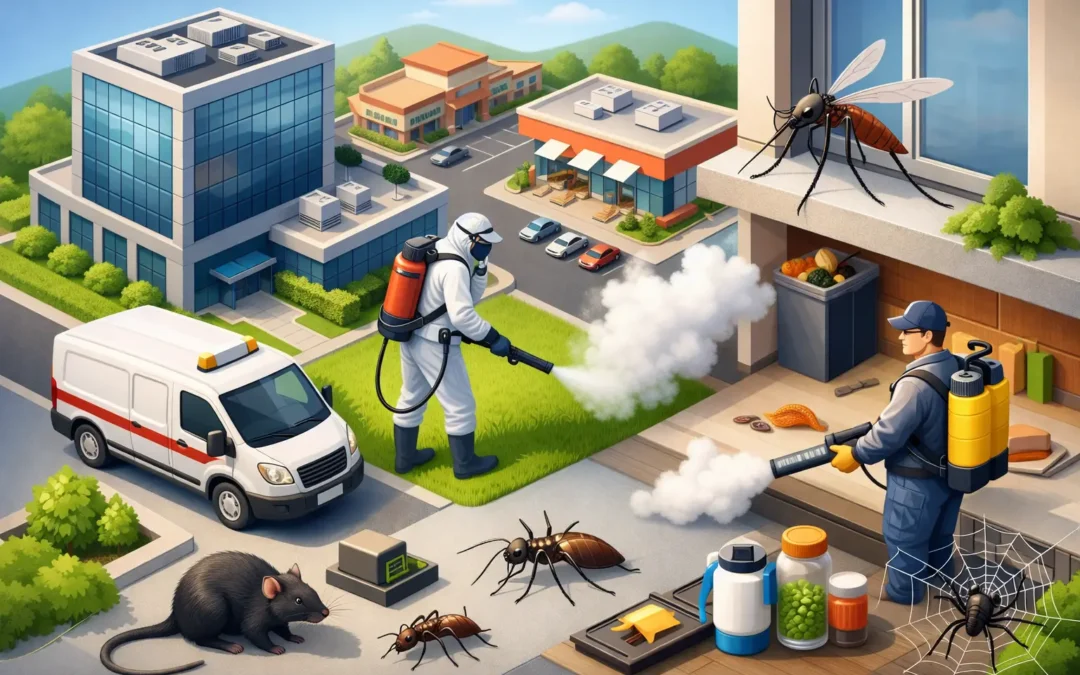
A single mouse in a stockroom, cockroaches near a break room, or flies around a restaurant entrance can become a customer complaint before the workday is over. The best commercial pest solutions do more than remove what is visible. They find the source, treat the active problem quickly, and reduce the conditions that let pests return.
For property managers, landlords, restaurant owners, retailers, and office operators, pest control is not a job to postpone. Pest activity can affect health standards, inventory, tenant satisfaction, employee comfort, inspections, and your reputation. The right response is fast, practical, and built around the needs of your property.
What Makes Commercial Pest Control Effective?
Commercial pest problems are rarely solved by spraying a product and hoping for the best. A lasting result depends on accurate identification, targeted treatment, exclusion work, sanitation recommendations, and follow-up when the pest or property requires it.
A licensed technician should start by inspecting the areas pests use to hide, feed, breed, and travel. That may include utility rooms, loading areas, dumpsters, drop ceilings, kitchens, storage spaces, tenant units, floor drains, and exterior entry points. The treatment plan should then match the pest, the severity of activity, and the type of business.
A warehouse with rodents needs a different approach than a restaurant with German cockroaches. A multi-unit rental with bed bugs requires a coordinated plan with tenants and management. An office dealing with occasional ants may need targeted baiting and moisture control rather than broad treatment. There is no one-size-fits-all commercial service, and that is exactly why inspection matters.
Best Commercial Pest Solutions by Problem
The best method depends on what is happening inside and around the building. Here are the commercial problems that need the fastest, most focused response.
Rodent Control for Mice and Rats
Rats and mice are serious commercial pests because they contaminate food, damage wiring, chew packaging, and reproduce quickly. Seeing one rodent during business hours often means there is more activity behind walls, above ceilings, or near storage areas.
Effective rodent control combines trapping or secured bait stations with exclusion. Doors need proper sweeps, gaps around pipes need sealing, and exterior holes must be addressed. Waste storage also matters. If dumpsters overflow or food debris is left near entry points, rodents have a reason to stay close to the property.
For restaurants, grocery operations, warehouses, and multi-unit buildings, routine monitoring is often the smart choice. It catches new activity before it becomes a larger infestation.
Cockroach Treatments That Reach the Source
Cockroaches can spread through wall voids, shared plumbing lines, deliveries, used equipment, and neighboring units. In commercial kitchens and apartment buildings, they hide in tight spaces near warmth, water, and food. A few roaches seen at night can signal a much larger population.
Professional cockroach control usually involves targeted gel baits, crack-and-crevice treatment, monitoring devices, and clear sanitation guidance. The goal is to reach roaches where they nest, not just treat the ones moving across a floor. Follow-up service is especially valuable for German cockroaches because egg cases can continue the cycle after an initial visit.
Avoid relying on store-bought foggers. They can scatter cockroaches deeper into walls and contaminate areas without addressing the infestation properly.
Bed Bug Service for Rentals and Hospitality
Bed bugs can create immediate stress for tenants, guests, staff, and property owners. They do not only live in beds. They can hide in upholstered furniture, baseboards, luggage areas, electrical outlets, and cracks around a room.
Commercial bed bug treatment needs a detailed inspection and a clear preparation plan. Depending on the site, technicians may use targeted applications, heat-based methods, monitoring, and scheduled follow-up visits. Property managers should act quickly, document the issue, and avoid moving furniture or belongings between units, which can spread bed bugs further.
Experience matters here. Bed bugs are persistent, and incomplete treatment can lead to repeat complaints and more disruption for everyone involved.
Fly Control for Food and Customer Areas
Flies are a major concern for restaurants, bakeries, bars, grocery stores, and any business with food waste or frequent door traffic. Drain flies may point to organic buildup in drains. Fruit flies often come from produce, recycling, spills, or beverage stations. House flies may be entering from outdoor garbage areas or open doors.
The right fly-control plan identifies the species first. Treatment may include drain cleaning recommendations, sanitation improvements, targeted products, fly lights placed correctly, and exterior waste management. Simply hanging a fly strip near a service counter is not a serious solution and can make a customer-facing problem look worse.
Ant, Wasp, and Seasonal Pest Management
Ants, wasps, hornets, spiders, centipedes, and occasional invaders can interrupt operations and create safety concerns. Stinging insects near patios, entrances, playgrounds, or loading docks need professional removal, especially when nests are active.
Ant control works best when bait is placed where foraging ants carry it back to the colony. Spraying visible trails alone can split some colonies or drive activity to another area. Exterior prevention, moisture correction, and sealing gaps around doors and windows can reduce recurring seasonal activity.
Choose a Plan That Fits the Property
The right service frequency depends on your risk level. A small office with an isolated ant issue may only need a targeted visit and basic prevention work. A restaurant, food facility, apartment building, retail center, or warehouse often benefits from scheduled inspections and ongoing monitoring.
Ask a pest control company how it handles documentation, follow-up, after-hours service, and urgent calls. Commercial properties need clear records of inspections, treatments, findings, and recommendations. This is helpful for health inspections, internal maintenance planning, and communication with tenants or staff.
Price should be clear from the start, but the lowest quote is not always the lowest long-term cost. A cheap one-time treatment can become expensive if pests return because entry points, sanitation concerns, or hidden harborages were ignored. Look for fair pricing, trained technicians, and a plan based on the actual conditions at your location.
Prevention Is Part of the Treatment
Professional treatment works better when the business addresses the conditions pests use. Staff and maintenance teams do not need complicated pest-control training, but they should know what to report and what daily habits matter.
Keep food sealed and remove waste regularly. Repair leaks under sinks and around appliances. Store inventory off the floor where possible, especially in stockrooms. Clean spills promptly, including sugary residue around beverage stations. Check incoming boxes, used furniture, and deliveries for signs of pests before bringing them farther into the building.
Exterior maintenance is just as important. Trim vegetation away from walls, keep dumpster areas clean, repair damaged weather stripping, and close gaps around utility lines. Pests do not appear without a reason. Removing food, moisture, shelter, and access makes every treatment more effective.
When to Call for Commercial Pest Service
Call as soon as you see droppings, live insects, gnaw marks, nest activity, unexplained bites, damaged packages, or repeated pest sightings. Waiting for a problem to become obvious to customers, tenants, or inspectors gives pests more time to spread.
For businesses in Hamilton, Burlington, Grimsby, Stoney Creek, and Ancaster, Super Pest Control provides practical commercial pest management with experienced technicians, eco-friendly treatment options, and 24/7 support for urgent situations. A prompt inspection can identify the real issue before it affects more of your property.
Your building should support your business, not create another daily problem. When pest activity appears, act while the source is still manageable and give your team, customers, and tenants the clean, secure environment they expect.