

A few itchy bites can turn a normal morning into a stressful inspection of every sheet, pet bed, and sofa cushion. With bed bugs vs fleas, the symptoms may look similar at first, but the source of the problem – and the treatment needed to stop it – can be very different.
Getting the identification right matters. Fleas are often tied to pets, wildlife, or carpeting. Bed bugs commonly travel in on luggage, used furniture, clothing, or visitors and settle close to where people sleep. Neither problem is a sign of a dirty home. Both can spread quickly when the first signs are ignored.
Bed Bugs vs Fleas: The Fastest Ways to Tell
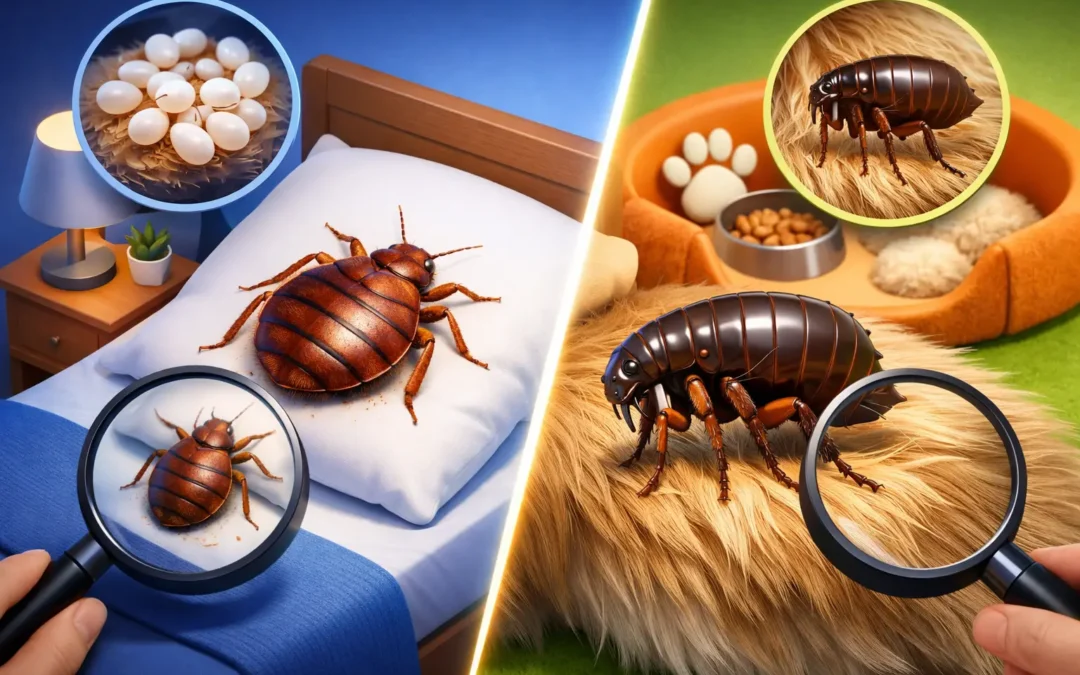
The clearest difference is what you can see and where you find it. Adult bed bugs are flat, oval, reddish-brown insects about the size of an apple seed. They do not jump or fly. They crawl and hide in tight cracks near beds, upholstered furniture, baseboards, and nearby belongings.
Fleas are much smaller, darker, and narrow from side to side. Their powerful back legs let them jump surprising distances. If a tiny insect hops away when you disturb a pet blanket, rug, or sock, fleas are more likely than bed bugs.
Bite patterns offer clues, but they are not a reliable diagnosis on their own. People react differently to insect bites, and some people have little or no visible reaction.
What bed bug evidence looks like
Bed bugs feed mostly at night, usually when a person is resting. Bites may appear in a line, cluster, or zigzag pattern on exposed skin such as the arms, shoulders, neck, face, and legs. They can become itchy, red, and irritated, but bite appearance alone cannot confirm bed bugs.
Look for physical evidence around the bed. Small dark dots on mattress seams, sheets, bed frames, headboards, or walls may be bed bug droppings. You may also find pale shed skins, tiny pearly eggs, or live bugs tucked into seams and crevices. A sweet, musty odor can occur in larger infestations, although many early infestations have no noticeable smell.
Bed bugs tend to stay close to a sleeping or resting host. Check the mattress piping, box spring, bed frame joints, behind the headboard, nightstands, sofas, recliners, and the edges of nearby carpeting. In apartments, condos, hotels, and shared housing, they can also move between units through wall gaps, utility openings, and shared spaces.
What flea evidence looks like
Flea bites are often concentrated around the ankles, lower legs, feet, waistline, or anywhere clothing fits tightly. Pets may scratch, bite at their fur, develop irritated skin, or show tiny dark specks in their coat. Those specks may be flea dirt – digested blood left by adult fleas.
A quick check can help. Place your pet on a white paper towel and comb through the fur with a fine-toothed flea comb. If dark crumbs fall onto the towel and turn reddish-brown when dampened, flea dirt is likely present. This is not a complete inspection, but it is a strong reason to act quickly.
Fleas often collect where pets sleep and rest: pet beds, rugs, upholstered furniture, cracks near baseboards, and shaded outdoor areas used by animals. Even homes without pets can get fleas when wildlife, rodents, previous tenants, or visiting animals introduce them.
Why Fleas and Bed Bugs Need Different Treatment
A flea problem is not solved just by treating the adult fleas you can see. Adult fleas are only part of the life cycle. Eggs, larvae, and pupae can remain in carpets, furniture, pet bedding, and floor cracks. Pupae are especially difficult because they can stay protected in their cocoon until warmth, movement, or carbon dioxide signals that a host is nearby.
That is why flea control usually requires a combined approach: treating pets through a veterinarian-approved plan, thoroughly vacuuming, laundering pet bedding, and professionally treating indoor areas when the infestation is active. Outdoor treatment may also be needed if pets are picking up fleas in the yard. Skipping pet treatment or stopping too soon often leads to another round of bites.
Bed bug treatment is more targeted and detail-sensitive. Bed bugs hide in narrow spaces and can survive for long periods without feeding. Foggers and general household sprays rarely reach the places where they are hiding. Worse, poorly applied products can scatter bed bugs into other rooms, making the infestation harder and more expensive to control.
Professional bed bug treatment may involve a detailed inspection, targeted products, crack-and-crevice treatment, steam or heat where appropriate, monitoring, and follow-up visits. The right method depends on the size of the infestation, the layout of the property, and whether the problem is in a single-family home, apartment, office, or hospitality setting.
What to Do When You Find Bites or Bugs
Do not rush to throw away a mattress, sofa, or pet bed before confirming the pest. Discarding furniture can spread insects through hallways, elevators, or other rooms, and a replacement can become infested if the original source remains.
Start by collecting useful evidence. Take clear photos of insects, stains, shed skins, or bite areas. If possible, capture a specimen in a sealed container or clear tape for identification. Then inspect the areas most connected to the problem: sleeping areas for bed bugs, and pet areas, carpets, and upholstered furniture for fleas.
For suspected bed bugs, reduce clutter around the bed, avoid moving belongings to another room, and wash and dry bedding on high heat when the fabric allows. Store clean items in sealed bags or containers until the issue is handled. Do not sleep in another bedroom if you suspect bed bugs. They may follow you and establish a second infestation.
For suspected fleas, vacuum carpets, rugs, furniture, cracks along baseboards, and under cushions frequently. Empty the vacuum outside in a sealed bag. Wash pet bedding and blankets, and speak with a veterinarian about safe, effective flea control for every pet in the home. Treating only one animal while other pets remain untreated can keep the flea cycle going.
When It Is Time to Call a Pest Professional
A single flea on a pet may be manageable with prompt pet care and cleaning. Repeated bites, jumping insects in carpets, flea dirt, or ongoing scratching after treatment suggest the infestation has moved beyond a simple cleanup.
With bed bugs, early professional help is usually the better choice. Bed bugs reproduce quickly, hide well, and are easy to carry from room to room. This is especially urgent for landlords, property managers, hotels, offices, and multi-unit buildings, where delayed action can affect more people and create larger treatment costs.
Super Pest Control provides experienced treatment for bed bugs and fleas with practical inspection, targeted pest management, and straightforward guidance on what to do before and after service. A trained technician can identify the pest, locate the likely source, and recommend a plan based on the actual conditions of the property rather than guesswork.
If the bites are continuing, the best next step is not another random spray. Get the pest identified, protect the areas where people and pets rest, and deal with the full infestation before a small problem gets comfortable in your home.