

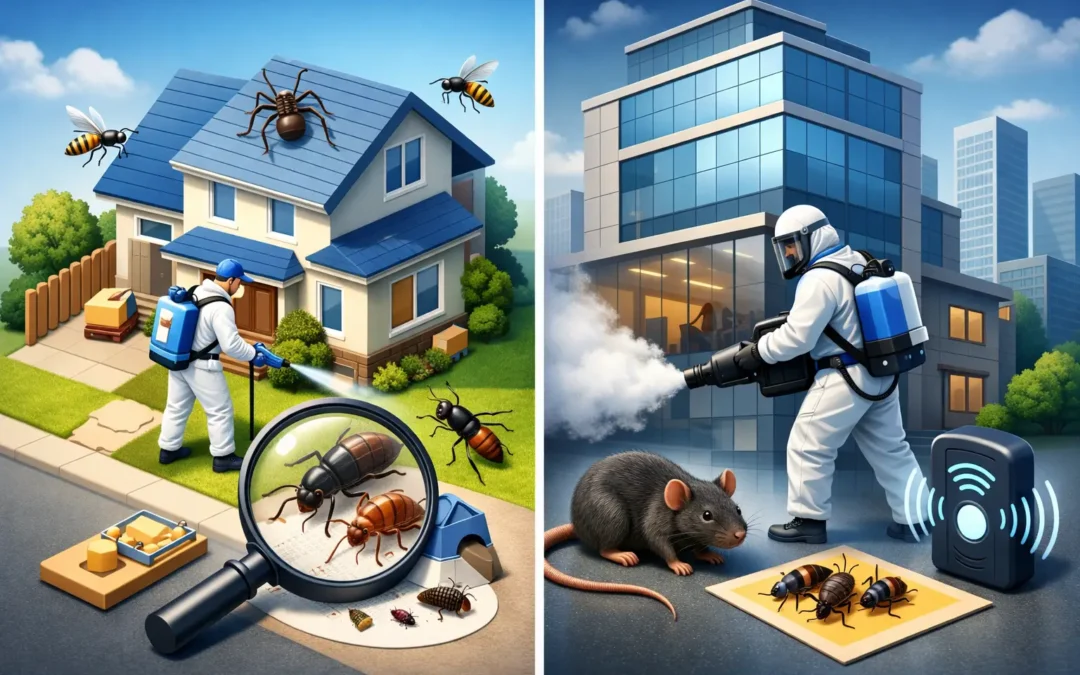
Residential vs commercial pest control may involve the same pests, but the stakes and treatment plans are rarely the same. A mouse in a kitchen, cockroaches in a restaurant, bed bugs in an apartment building, or wasps near an office entrance all need fast action. Yet the right response depends on the property, the people using it, and how far the infestation has spread.
For homeowners, the priority is usually restoring comfort and protecting family, pets, and belongings. For businesses, pest activity can also interrupt operations, affect customers, create sanitation concerns, and damage a hard-earned reputation. Knowing the difference helps you choose a treatment that solves the current problem without leaving the door open for the next one.
Residential vs Commercial Pest Control: The Main Difference
Residential pest control is built around the home and the people living in it. A technician looks for the source of activity in areas such as kitchens, basements, bedrooms, attics, garages, yards, and exterior entry points. The treatment plan must be effective while considering children, pets, food storage, and daily household routines.
Commercial pest control is designed around a larger operating environment. Restaurants, retail stores, warehouses, offices, rental buildings, medical facilities, and other workplaces may have more square footage, more entry points, more waste, and more people moving through the space. A single pest sighting can require a broader inspection because pests can spread through storage rooms, utility areas, shared walls, loading zones, and neighboring units.
The goal is the same: eliminate the active infestation and prevent it from returning. The process, scheduling, documentation, and ongoing monitoring can be very different.
How Residential Pest Treatment Works
At a home, pest control starts with finding out why pests chose the property. Rodents may be entering through gaps near utility lines or foundations. Ants may be following moisture or food sources. Bed bugs may have arrived after travel, a guest visit, or a used furniture purchase. Cockroaches often thrive where there is warmth, water, hiding space, and accessible food.
A professional inspection identifies pest species, activity levels, nesting areas, and likely entry points. This matters because treating the wrong pest, or treating only the visible pests, wastes time and money. A few mice can signal an exterior access issue. One cockroach may be a warning that more are hiding behind appliances, inside wall voids, or under cabinets.
Residential treatments are usually focused on a specific room, area, or infestation. Bed bug control may require careful bedroom inspection, targeted treatment, preparation instructions, and follow-up visits. Rodent control may combine trapping, removal, exclusion recommendations, and sanitation guidance. Wasp removal requires safe handling of the nest and an assessment of where wasps are entering or gathering.
Homeowners often want the fastest possible appointment, especially when pests are in bedrooms, kitchens, or living areas. Fast service is valuable, but it should not mean rushed work. The best treatment addresses the infestation, explains what happens next, and gives the household clear steps to support results.
Why Commercial Pest Problems Need More Planning
Commercial properties face risks that go beyond the nuisance of seeing a pest. A customer who sees a cockroach in a dining area may not return. A rat near a loading dock can create concern among staff and tenants. Flies in a food-service setting can quickly become a sanitation issue. In a rental property, bed bugs or cockroaches can move between units and affect multiple residents.
That is why commercial service often includes a more structured plan. The technician may inspect the entire facility, identify high-risk zones, review waste handling, look at receiving and storage practices, and assess exterior conditions. In multi-unit buildings, the inspection may need to extend to adjoining units, hallways, utility chases, laundry rooms, and garbage areas.
Scheduling also matters. A restaurant may need service before opening or after closing. An office may need discreet treatment outside business hours. A warehouse may require a plan that works around inventory, equipment, and staff safety. The goal is to control pests without creating unnecessary disruption.
Commercial clients may also need treatment records, service reports, and recurring inspections. These records help property managers track activity, show that issues were addressed, and spot patterns before a small problem becomes a large one.
Prevention Is a Bigger Part of Commercial Service
A one-time treatment can remove an active problem, but recurring pest management is often the smarter choice for commercial sites. Businesses create conditions that pests use every day: deliveries, open doors, food waste, cardboard, drains, landscaping, storage, and high foot traffic.
Integrated pest management focuses on reducing those conditions. It may include monitoring devices, targeted treatments, exclusion work, sanitation recommendations, moisture control, and regular inspections. This approach does not mean waiting for an infestation to get worse. It means using the right treatment at the right time while reducing the reasons pests return.
For property managers and landlords, prevention is especially valuable. Early action can limit tenant complaints, avoid widespread treatment needs, and protect the condition of the building.
Treatment Methods: Similar Tools, Different Application
Both residential and commercial pest control can use traps, baits, targeted products, exclusion methods, removal, monitoring, and sanitation recommendations. The difference is how those methods are selected and applied.
In a home, treatment may be concentrated around a kitchen, bedroom, basement, or exterior perimeter. In a commercial setting, the same pest may require a wider plan. For example, cockroach treatment in a single-family home may focus on the kitchen and nearby hiding spots. In a restaurant or apartment complex, technicians may also need to inspect drains, equipment voids, storage areas, staff rooms, neighboring units, and trash locations.
Eco-friendly pest control can be part of either service when it is appropriate for the infestation. Practical pest control is not about using the strongest product everywhere. It is about using proven methods carefully, targeting the source, and protecting the people who live or work on the property.
Cost: Why Prices Can Vary
There is no honest one-price answer for every pest problem. Residential service costs depend on the pest, number of affected areas, severity, property layout, and whether follow-up visits are needed. A minor ant issue is not priced like a heavy bed bug infestation or extensive rodent removal.
Commercial pricing often reflects the size of the facility, number of units or service areas, pest pressure, service frequency, reporting requirements, and operational complexity. A small office with occasional ants needs a different plan than a restaurant, warehouse, or multi-unit rental building.
The lowest quote is not always the lowest final cost. If a treatment fails to address the nest, entry point, or neighboring source, the problem can return quickly. Ask what the service includes, whether follow-up is recommended, and what prevention steps will help protect the property afterward.
When to Call for Professional Help
Call promptly when you see repeated activity, droppings, bites, nests, damage, foul odors, or pests in food-preparation and sleeping areas. Do not wait for a few cockroaches to become a kitchen infestation or for scratching sounds to become a rodent problem inside walls.
Businesses should act at the first sign of pest activity, even if the problem seems isolated. One sighting near inventory, food, customers, or tenants can point to a larger issue nearby. Quick inspection and targeted treatment are usually less disruptive and more affordable than emergency cleanup after an infestation grows.
Whether you manage a busy commercial property or need relief in your home, choose a pest control provider that can identify the source, explain the treatment clearly, and respond when the problem cannot wait. Super Pest Control provides fast, experienced service for active pest problems, with practical treatment plans built around your property and your budget.