

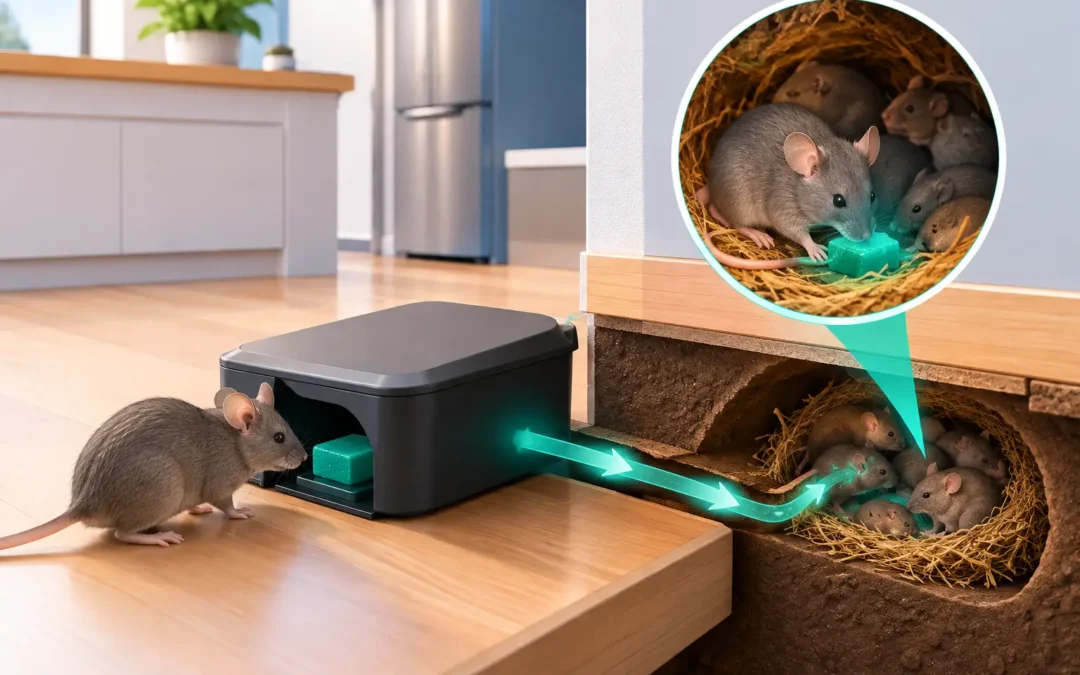
A few droppings beneath the sink or scratching sounds in a ceiling are not small problems to ignore. Mice treatment works best when it begins quickly, before a few mice become an active infestation inside walls, storage areas, kitchens, or utility rooms. The right approach removes the mice already indoors and blocks the access points that invited them in.
Mice can contaminate food, damage insulation and wiring, and create serious concerns for homes, rentals, restaurants, offices, and retail properties. Seeing one mouse during the day can also mean there is more activity nearby. Mice are cautious, quick to reproduce, and very good at staying out of sight.
Why Mice Keep Coming Back
A mouse does not need an open door to enter a building. Small gaps around pipes, foundation cracks, damaged weatherstripping, dryer vents, garage doors, and utility lines can be enough. Their flexible bodies can fit through openings far smaller than most people expect.
Once inside, mice look for three things: shelter, food, and warmth. Crumbs behind appliances, pet food left out overnight, unsecured pantry items, cluttered storage rooms, and leaking plumbing can all make a property more attractive. In fall and winter, homes and commercial buildings become especially appealing because mice are searching for protected nesting areas.
This is why setting a few traps without addressing entry points often provides only temporary relief. You may catch several mice, then notice fresh droppings weeks later because another mouse has entered through the same gap. Effective control is not just about catching what you see. It is about finding out how they got in and making sure they cannot return.
What Effective Mice Treatment Includes
Professional mice treatment should be built around inspection, removal, exclusion, and prevention. Each part matters. Skipping one can leave the infestation active or create conditions for a new one.
A detailed inspection
A trained technician begins by identifying signs of activity and likely travel routes. This can include droppings, gnaw marks, grease marks along baseboards, nesting material, holes near plumbing, or noises coming from walls and ceilings. The inspection should cover kitchens, basements, attics, garages, utility rooms, crawl spaces, and exterior areas where mice may be entering.
For commercial properties, the inspection may also focus on receiving doors, dumpster areas, storage shelves, employee break rooms, and areas where inventory is kept. A restaurant or retail space can have different risk points than a detached home, so the treatment plan should fit the property rather than follow a one-size-fits-all routine.
Targeted trapping and removal
Traps are often a key part of a mouse control plan. They allow technicians to reduce active mouse populations while monitoring where activity is strongest. Proper placement matters more than the number of traps used. Mice usually travel along walls, behind appliances, and through quiet, protected pathways rather than crossing open rooms.
Bait products may be appropriate in certain situations, but they must be used carefully and according to label directions. Homes with children or pets need extra consideration, and food-handling businesses require an approach that protects customers, staff, and operations. A qualified pest control professional can determine which methods are appropriate for the location and level of activity.
Exclusion to block entry points
Exclusion is what turns short-term removal into longer-lasting control. Gaps near pipes, vents, siding, foundations, and doors should be sealed with durable materials that mice cannot easily chew through. Damaged door sweeps and screens may also need repair or replacement.
Not every opening should be sealed immediately without checking for active mice. If animals are trapped inside a wall or structure, that can create odor and sanitation problems. A professional can help time the exclusion work properly, combining it with trapping and follow-up monitoring.
Sanitation and habitat changes
Cleaning alone will not eliminate a mouse infestation, but sanitation makes a major difference after treatment. Store dry foods in hard containers, clean crumbs and spills promptly, keep pet food sealed, and remove cardboard or clutter that can be used for nesting. Outdoor garbage containers should close tightly, and vegetation should be kept from pressing directly against the building.
These are practical changes, not perfection requirements. A clean home can still get mice through an unsealed entry point. But reducing food and shelter makes your property less rewarding for any mouse that does get inside.
Signs You Need Mice Treatment Now
Fresh droppings are one of the clearest signs of active activity, especially in cabinets, pantries, drawers, behind stoves, or along basement walls. Droppings are usually small, dark, and pointed at the ends. New droppings tend to look darker and may appear in the same areas repeatedly.
Other warning signs include scratching at night, chewed food packaging, shredded paper or fabric, a stale odor in enclosed spaces, and small holes near baseboards or cabinets. You may also notice pets staring at walls, appliances, or vents where mice are moving.
Do not wait for the problem to become obvious in every room. Mice reproduce quickly, and a quiet infestation can spread through connected walls, ceilings, and utility spaces. In apartments, condos, and attached commercial units, activity can also move between neighboring spaces. Early service is usually simpler and less disruptive than waiting for a larger infestation.
Why DIY Mouse Control Can Fall Short
Store-bought traps can help with an isolated mouse, especially when placed correctly. However, DIY control becomes difficult when you do not know the entry point, nesting location, or full extent of the activity. A trap that catches one mouse may not address mice in an attic, behind a dishwasher, or inside a shared wall.
Rodent poison is another area where caution matters. Improper placement can put children, pets, and non-target animals at risk. It can also lead to mice dying in inaccessible spaces, creating unpleasant odors and difficult cleanup. For homes with ongoing activity, rental properties, or businesses, professional assessment is usually the safer and more reliable choice.
The trade-off is straightforward: a DIY attempt may cost less at first, but repeated purchases and recurring activity can become more frustrating and expensive than a focused treatment plan. If there are multiple signs of activity, recurring droppings, or suspected wall or attic nesting, it is time to bring in an experienced technician.
Mice Treatment for Homes, Rentals, and Businesses
Homeowners often need fast relief in kitchens, basements, garages, and attics. Landlords and property managers need documentation, clear communication, and treatment that accounts for shared walls and tenant access. Commercial operators need discreet service that protects inventory, sanitation standards, and customer confidence.
Super Pest Control provides practical mice control for properties that need a fast, professional response. A trained technician can assess the situation, explain the treatment plan clearly, and recommend the exclusion and prevention work needed to reduce future risk.
For any property type, follow-up is valuable. Treatment should not end with the first trap placement. Monitoring results, checking for new signs, and confirming that entry points have been addressed gives you a clearer picture of whether the problem is truly under control.
How to Prepare for a Mouse Service Visit
Before treatment, clear access to areas where you have seen activity. This may include under sinks, behind appliances, in pantries, basement storage areas, or near utility rooms. There is no need to empty your entire home, but making these areas accessible helps the inspection go faster and allows the technician to identify evidence that may otherwise be hidden.
Put food, pet dishes, and loose pantry items away where possible. If you have noticed droppings, avoid sweeping or vacuuming them dry, which can stir particles into the air. Wear gloves, use a disinfectant, and clean carefully according to safe sanitation practices. Tell the technician where and when you have heard noises or found evidence, even if it seems minor.
Fast action is the best advantage you have. When mice are removed, entry points are sealed, and food sources are controlled, your property becomes much harder for them to use as a home.