

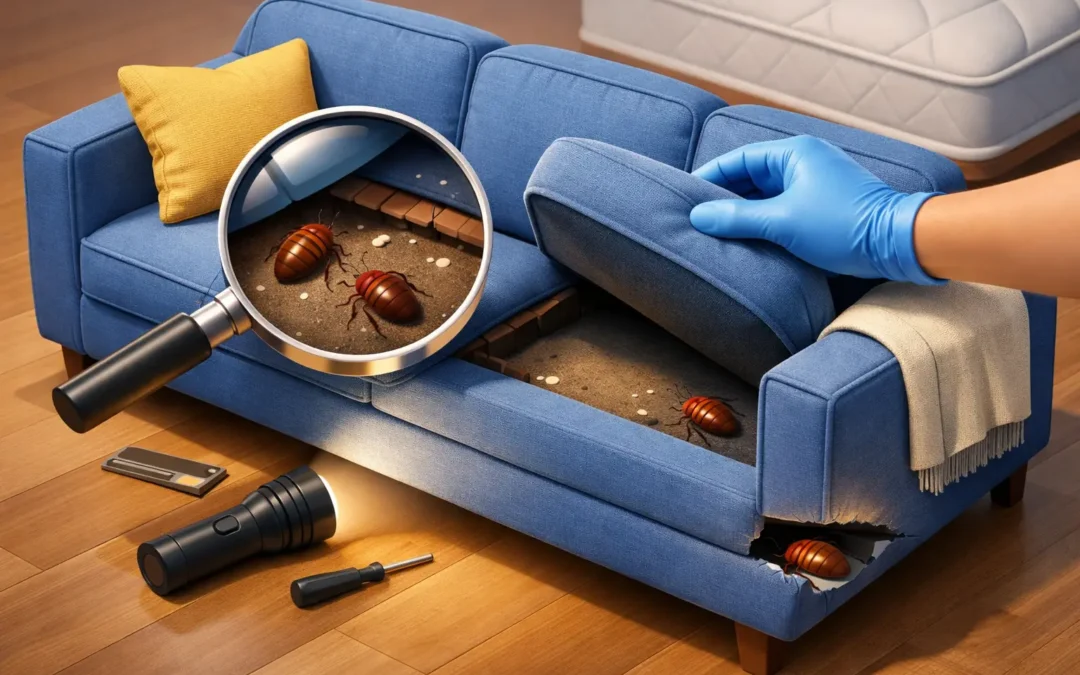
A couch can be the first place bed bugs settle in after entering a home. If you are waking with unexplained itchy bites or finding tiny dark marks near the cushions, you may be asking: do bed bugs live in couches? Yes, they can. Upholstered furniture gives bed bugs tight hiding spaces close to people, making it an ideal place to feed and stay hidden.
The good news is that a couch infestation can be treated. The sooner you identify the signs and avoid spreading the bugs to other rooms, the easier it is to get control of the problem.
Do Bed Bugs Live in Couches and Sofas?
Bed bugs do not build nests the way ants or wasps do. They hide in narrow cracks and come out, usually at night, to feed on people. A couch offers plenty of protected hiding spots: cushion seams, piping, folds in fabric, staple lines underneath the frame, screw holes, reclining mechanisms, and gaps where the arms connect to the body.
They are especially likely to live in a couch that people use for sleeping, napping, or long evenings watching television. This includes sleeper sofas, sectional couches, recliners, office lounge furniture, and waiting-room seating.
A couch can become infested after bed bugs are carried inside on luggage, clothing, a purse, or used furniture. In apartments, condos, hotels, and shared commercial spaces, they can also move between units or rooms through wall voids, utility openings, and adjoining furniture. Finding bed bugs in a couch does not mean the home is dirty. These pests are hitchhikers, and cleanliness alone will not stop them.
Where Bed Bugs Hide in a Couch
Do not limit your inspection to the top of the cushions. Bed bugs prefer dark, protected areas where they can stay undisturbed. In a couch, the most common hiding places are along seams and zippers, beneath removable cushions, under the dust cover on the bottom, inside the wooden frame, and around legs, joints, and hardware.
Recliners and sleeper sofas deserve extra attention. Their moving parts create many small gaps that are difficult to inspect and even harder to treat with store-bought products. Bed bugs may also hide in nearby throw pillows, blankets, side tables, baseboards, carpet edges, and electrical outlets near the couch.
Adults are flat, reddish-brown insects about the size and shape of an apple seed. Younger bed bugs are smaller and paler, so they can be easy to miss. Eggs are tiny, whitish, and often stuck in protected seams. Even if you do not see a live bug, other evidence can confirm activity.
Signs Your Couch May Have Bed Bugs
Bites can be a warning sign, but they are not proof on their own. Mosquitoes, fleas, skin irritation, and allergic reactions can look similar. A proper inspection looks for physical evidence around the furniture.
Watch for these signs:
- Small black or dark brown spots on upholstery, cushions, or the wall behind the couch. These are often bed bug droppings.
- Rust-colored stains or tiny blood spots on fabric, blankets, or pillowcases.
- Shed skins, pale eggs, or live insects in seams and crevices.
- A sweet, musty odor in heavier infestations.
Check the couch with a flashlight and a thin plastic card. Slowly run the card through seams, around buttons, and into cracks to expose anything hiding inside. Wear gloves if preferred, and place any suspected insect in a sealed container or clear bag for identification.
Do not assume the couch is the only affected item. If bed bugs are feeding on someone who sits or sleeps there, inspect beds, bed frames, nightstands, upholstered chairs, and luggage storage areas as well.
What to Do If You Find Bed Bugs in Your Couch
Avoid dragging the couch outside, moving it into another room, or giving it away. Those actions can spread bed bugs through the home, hallway, elevator, or to someone else. A couch does not automatically need to be thrown out, but it needs to be handled correctly.
Start by reducing the chance of spread. Stop sleeping on the couch, but do not suddenly move to another bedroom if you have been sleeping there regularly. Bed bugs may follow you, creating a second infestation. Remove blankets, pillow covers, and washable fabrics from the couch, seal them in bags before carrying them through the home, then wash and dry them on high heat. The dryer heat is especially important.
Vacuum seams, cushion edges, the frame, and the floor around the couch using a crevice attachment. Immediately seal and discard the vacuum contents in an outdoor trash bin. Vacuuming can remove some bugs and eggs, but it will not solve an established infestation by itself.
Do not spray alcohol, bleach, gasoline, foggers, or random insecticides on the couch. These methods can create fire hazards, damage furniture, drive bed bugs deeper into hiding, or expose your family and pets to unnecessary chemicals. Bug bombs are particularly unreliable because bed bugs are usually tucked inside cracks where the fog does not reach.
Can You Keep an Infested Couch?
In many cases, yes. Whether a couch can be saved depends on the severity of the infestation, its construction, and whether treatment can reach the hiding areas. A simple upholstered couch with removable cushions may be more manageable than a large sectional with deep internal voids or a complex power recliner.
Professional treatment often allows homeowners and property managers to keep furniture that would otherwise be expensive to replace. A technician can inspect the couch, surrounding rooms, and likely travel routes, then use a targeted treatment plan rather than treating only the visible bugs.
Discarding furniture may make sense when it is heavily damaged, impossible to treat thoroughly, or no longer worth saving. If you must dispose of it, clearly mark it as bed bug-infested and follow local disposal rules. Never leave an untreated couch at the curb where another person may take it home.
Why Couch Bed Bugs Usually Need Professional Treatment
Bed bugs are difficult because they hide well, reproduce quickly, and can survive for months without feeding under favorable conditions. Missing a few eggs or a protected pocket of bugs can restart the infestation after you think it is gone.
Effective control usually combines detailed inspection, targeted treatments, careful preparation, follow-up visits when needed, and monitoring. This integrated approach is safer and more reliable than repeatedly spraying visible insects. It also addresses nearby hiding places, not just the couch where you first found evidence.
Super Pest Control has completed more than 10,000 bed bug and cockroach treatments, using experienced technicians and practical treatment plans designed to control infestations quickly. If bites, stains, or live bugs are appearing around a couch, getting an inspection early can prevent the problem from reaching bedrooms, neighboring units, or customer-facing areas of a business.
Common Questions About Bed Bugs in Couches
Can bed bugs live in leather couches?
Yes. Leather has fewer fabric folds than upholstered furniture, but bed bugs can still hide in seams, under cushions, beneath the frame, and inside gaps around hardware. They need a crack, not a fabric surface.
How long can bed bugs live in a couch without people nearby?
Bed bugs can survive a long time without a meal, sometimes for months. Leaving a couch unused is not a dependable way to eliminate them. They may remain hidden until someone begins using the space again.
Do bed bugs stay only in the couch?
Usually not. Once established, they often spread to nearby furniture and rooms. Early action matters because a small, contained problem is far less disruptive to treat than a whole-home infestation.
A couch should be a place to relax, not a place to worry about bites. If you see evidence of bed bugs, contain the area, avoid risky DIY sprays, and arrange a thorough inspection before the insects get a chance to spread.