

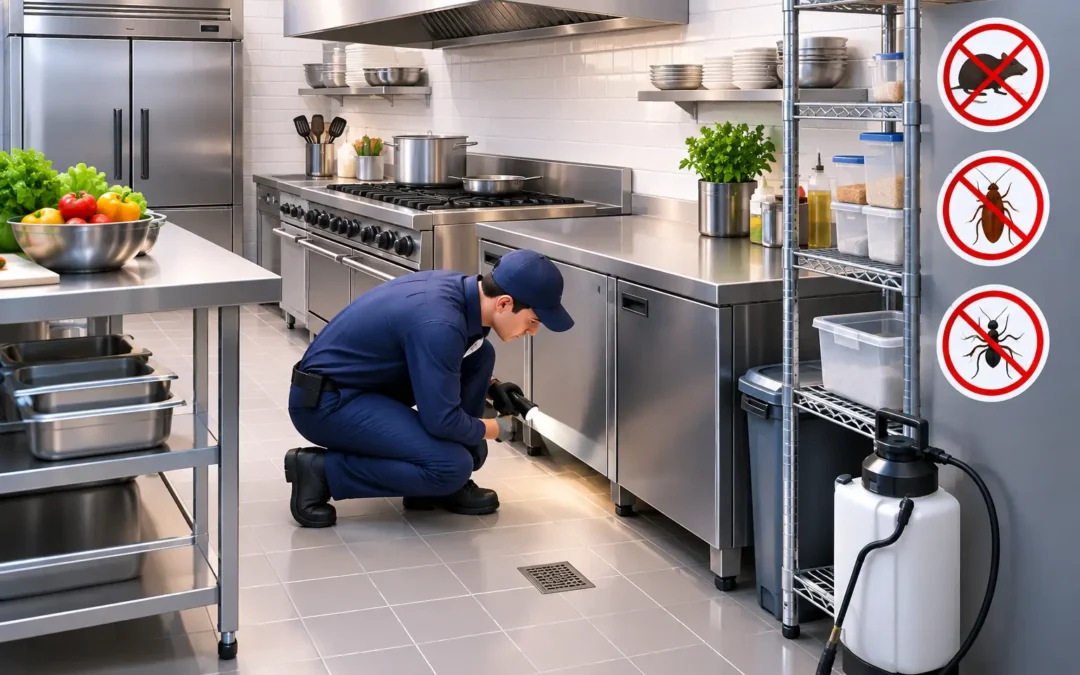
A single cockroach seen during the lunch rush can turn into a failed inspection, a bad review, or a lost customer by dinner. This commercial kitchen pest prevention guide is built for restaurant owners, kitchen managers, caterers, and food service operators who need practical ways to keep pests out before they damage their reputation.
Pest prevention is not just about spraying when you see a problem. Commercial kitchens provide exactly what roaches, rodents, ants, and flies need: warmth, water, food, hiding places, and frequent deliveries. The goal is to remove those advantages every day and catch warning signs before a small issue becomes an infestation.
Why Commercial Kitchens Attract Pests So Fast
A kitchen can look clean to customers and still have pest pressure behind equipment, under sinks, inside floor drains, and around dry-storage shelves. Grease buildup, food crumbs, leaking pipes, cardboard, and overnight trash all create opportunities.
Cockroaches often settle near hot motors, dishwashers, drain lines, and wall gaps. Mice and rats follow exterior openings, utility lines, loading areas, and food storage routes. Drain flies breed in organic film inside drains, while fruit flies can multiply around spills, overripe produce, and recycling bins.
The hard part is that commercial kitchens are busy. Staff may clean visible surfaces thoroughly but miss the narrow spaces pests use. Prevention works best when cleaning, maintenance, receiving, and pest monitoring are treated as part of daily food safety, not separate chores that only happen after a complaint.
Commercial Kitchen Pest Prevention Guide: Start With Food, Water, and Waste
Pests do not need a large food source. A few crumbs under a prep table, grease under a fryer, or a loose bag of flour can support an active infestation. Focus on the areas customers never see, especially at closing time.
Food should be stored in sealed, pest-resistant containers whenever possible. Keep dry goods off the floor and slightly away from walls so staff can inspect behind and beneath shelving. Rotate stock, remove damaged packages, and avoid leaving open bags in storage rooms overnight. Cardboard shipments should be broken down and removed quickly because roaches and insects can arrive or hide in corrugated boxes.
Water control matters just as much. Repair dripping faucets, sweating pipes, loose drain connections, and standing water under ice machines or dishwashing stations. Empty and clean mop buckets after use. A damp mop closet, neglected floor drain, or slow leak behind a cooler can become a reliable pest harbor.
Waste should leave the kitchen on schedule, but the dumpster area needs attention too. Keep outdoor containers closed, clean up spills around them, and make sure the enclosure is free of loose garbage and overgrown vegetation. If garbage sits too close to an exterior door, rodents and flies are being invited toward the building.
Give Drains More Than a Quick Rinse
Drains are a frequent source of fly activity, particularly in kitchens with floor drains, bar sinks, and dishwashing areas. Rinsing with water may not remove the sticky organic buildup where flies breed. Staff should physically clean drain covers and surrounding surfaces, then use an appropriate drain-cleaning program designed to break down buildup.
Avoid assuming every small fly is a drain fly. Fruit flies, phorid flies, and other small flies can have different breeding sources. Identifying the fly correctly saves time and prevents repeated treatments that do not address the cause.
Close the Openings Pests Use
Pest control products can reduce active populations, but they cannot permanently compensate for a building with open access points. Walk the interior and exterior of the property regularly, paying close attention to delivery doors, utility penetrations, vents, cracks around pipes, and gaps at the foundation.
Door sweeps should sit tightly against the threshold. Screens should be intact, and doors should not be propped open during deliveries or breaks. Seal gaps around plumbing and electrical lines with durable materials suitable for the area. Rodents can fit through surprisingly small openings, and cockroaches need even less space.
Equipment placement also affects prevention. Heavy appliances should be positioned so crews can clean behind and beneath them. If a fryer, refrigerator, or prep station creates an unreachable grease trap, it will eventually create a pest risk. In a tight kitchen, this may mean scheduling periodic deep cleans or moving equipment during slower hours.
Give Every Shift a Clear Pest Prevention Routine
The best prevention plan is simple enough that busy staff will actually follow it. Managers should assign responsibilities by area instead of relying on a general instruction to “keep things clean.” One person can check dry storage, another can inspect under sinks and around dish equipment, and closing staff can verify that waste and food are secured.
A reliable routine includes four priorities:
- Wipe food debris and grease from prep areas, equipment edges, floors, and wall junctions before closing.
- Store ingredients in sealed containers and remove damaged packaging, old produce, and unnecessary cardboard.
- Empty indoor trash, clean receptacles, and make sure exterior garbage lids close fully.
- Report leaks, droppings, gnaw marks, fly activity, or pest sightings immediately instead of waiting for the next shift.
Training matters because sightings are often dismissed. A staff member who sees one roach near a dishwasher may assume it came in from outside. In a commercial kitchen, one sighting can be an early warning of activity inside a wall void, motor compartment, or drain area. Fast reporting gives management time to inspect and respond before the issue spreads.
Keep a simple pest log with the date, location, pest seen, and any conditions noticed, such as a leak or damaged door sweep. This record helps identify patterns. Repeated fly activity at one sink or droppings near one storage wall point to a source that needs correction.
Monitor Before Customers Notice a Problem
Monitoring turns pest control from a reaction into a system. Glue boards, insect monitors, and routine inspections can reveal cockroach or rodent activity in low-traffic areas before staff see pests in the open. Placement matters. Monitors should be positioned along walls, behind equipment, near plumbing, and in storage areas, not in the middle of open floors.
Check monitors on a scheduled basis and document findings. A sudden increase in catches, fresh rodent droppings, gnawing, oily rub marks, or unexplained package damage should trigger a closer inspection. Do not move monitors constantly, since consistent placement makes trends easier to spot.
Be cautious with over-the-counter sprays. Spraying visible insects can drive roaches deeper into walls, contaminate food areas if used improperly, and make professional inspection harder. In a food business, any pesticide use must follow label directions and food safety requirements. Often, sanitation and exclusion corrections are the first and most effective step.
Know When to Call a Commercial Pest Professional
Call for professional help when you see recurring cockroaches, rodent droppings, live rodents, multiple flies despite cleaning, ants trailing into food areas, or pests appearing during daytime hours. Daytime cockroach activity, especially, may indicate a larger population competing for hiding space.
A qualified commercial pest professional should inspect the full environment, not just treat the spot where a pest was found. That includes drains, utility rooms, storage, exterior access points, dumpsters, equipment voids, and neighboring tenant conditions when applicable. In multi-unit buildings, pest movement between suites can make a single-kitchen treatment ineffective without coordinated action.
Ask for a plan that combines targeted treatment with sanitation recommendations, exclusion work, monitoring, and follow-up. The right approach depends on the pest, the kitchen layout, operating hours, and the severity of activity. A small fly issue may need drain service and moisture control, while an established cockroach problem may require detailed treatment and several follow-up visits.
Protect Your Kitchen Between Inspections
Health inspections are not the time to discover a maintenance problem. Schedule internal checks before busy weekends, seasonal rushes, or major catering events. Look under equipment, inspect stock deliveries, test door sweeps, and review the pest log with supervisors.
A pest-free kitchen is built through small, consistent actions: a sealed gap, a repaired leak, a clean drain, a closed trash lid, and a report made the same day. If pests are already showing up, act quickly. The sooner the source is found and corrected, the easier it is to protect your food, staff, customers, and business reputation.