

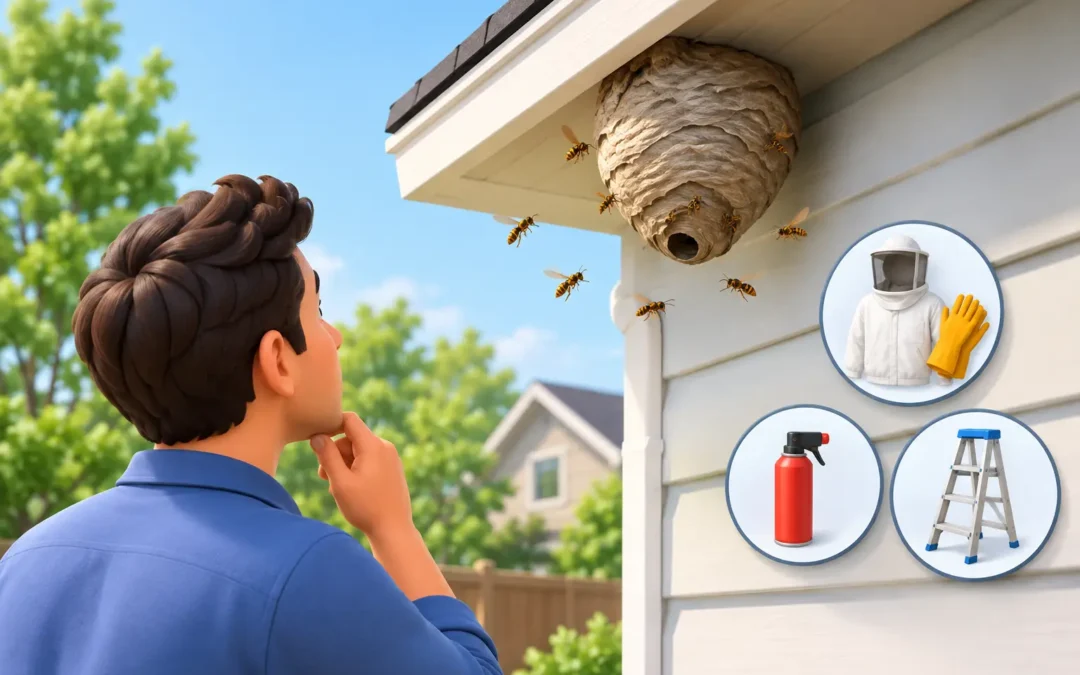
A wasp nest under a deck, beside a front door, or inside an attic is not a problem to ignore until it gets bigger. Are wasp nests dangerous? They can be, especially when they are active, close to people, or home to an aggressive species. A single wasp may sting when threatened. Disturb a nest, however, and several or dozens of wasps may defend it at once.
The right response depends on where the nest is, how active it is, and who could come into contact with it. The safest move is usually simple: keep your distance, keep children and pets away, and arrange professional removal before someone gets stung.
Are Wasp Nests Dangerous Near Your Home?
An active wasp nest is a safety risk because wasps defend their colony. Unlike honey bees, many wasp species can sting repeatedly. Yellow jackets, paper wasps, and hornets are particularly likely to react when a person gets too close, blocks their flight path, vibrates the structure holding the nest, or tries to spray it.
Location makes a major difference. A small nest high in a tree at the far end of a large property may be less urgent than a nest near a doorway. But a nest in a wall void, shed, garage, playground area, mailbox, porch ceiling, or outdoor dining space deserves prompt attention. Every trip past it creates another chance for an accidental disturbance.
The risk rises in late summer and early fall, when colonies are larger and wasps may be more defensive around food and garbage. A nest that seemed quiet in June can become a much bigger issue by August. Do not assume a nest is safe just because you only see a few wasps outside. The visible activity may be only a small part of the colony.
The Health Risk: More Than a Painful Sting
For most people, a wasp sting causes sharp pain, redness, swelling, and itching around the sting site. That is unpleasant, but it is usually manageable. The greater concern is a person receiving multiple stings or having a severe allergic reaction to venom.
Call emergency services immediately if someone develops trouble breathing, swelling of the face, lips, or throat, widespread hives, dizziness, fainting, vomiting, or confusion after a sting. These can be signs of anaphylaxis, a life-threatening reaction that needs urgent medical care.
Even without a known allergy, multiple stings can be dangerous. Children, older adults, people with asthma, and anyone with a history of severe insect-sting reactions should not be near an active nest. Keep in mind that a person can have a serious reaction even if prior stings caused only minor symptoms.
When a Nest Needs Immediate Removal
Not every nest creates the same level of danger, but certain situations call for fast professional help. Treat the situation as urgent if wasps are entering a wall, attic, chimney, or ceiling gap. Removing a visible entrance without treating the colony can force wasps deeper into the structure or into living areas.
You should also act quickly when a nest is near a frequently used entrance, near a bedroom window, around a patio, or in a location used by customers, employees, tenants, or visitors. Commercial properties have an added responsibility: a sting incident can disrupt business and put staff and guests at risk.
Ground nests require extra caution. Yellow jackets often build underground, with only a small hole visible in a lawn, garden bed, retaining wall, or landscape border. People commonly discover them while mowing, trimming, or moving outdoor equipment. Do not cover the hole, pour gasoline into it, or flood it with water. Those methods can provoke the colony without solving the problem.
Why DIY Wasp Nest Removal Can Go Wrong
It is tempting to buy an aerosol spray and handle the nest yourself. That approach occasionally works on a very small, exposed nest, but the potential downside is high. You may not know the species, the full nest size, or whether there is another entrance hidden behind siding or inside a wall.
Spraying from too close is one of the most common mistakes. Wasps may swarm toward the person holding the can, particularly if the spray misses, runs out, or does not reach the colony. Knocking down a nest, using a ladder, or trying to burn a nest creates even more risk. A fall, fire, or mass stinging event is not a good tradeoff for a low-cost shortcut.
Home remedies are equally unreliable. Dish soap, essential oils, smoke, and homemade traps may kill a few foraging wasps, but they rarely eliminate an established nest. Traps can also attract more wasps to the area when placed near doors, patios, or food service spaces.
A trained pest control technician can identify likely nesting behavior, apply treatment at the right point, and advise whether removal of the physical nest is needed. This matters most for nests in structures, where incomplete treatment can lead to wasps emerging indoors.
What to Do While You Wait for Help
Do not stand nearby to watch the nest. Stay calm and give it space. Wasps are less likely to react if their flight path is clear and the surrounding area is quiet.
Keep doors and windows near the nest closed when possible, and tell everyone in the home or building where the nest is located. Move pet bowls, sugary drinks, trash cans, and food preparation away from the area. If the nest is near an entrance, use another door until it has been treated.
Avoid mowing, pressure washing, pruning, hammering, or running loud equipment near the nest. Vibrations can trigger defensive behavior, especially with ground nests and nests inside exterior walls. At night, resist the urge to approach with a flashlight. Many species are less active after dark, but they are not harmless, and poor visibility increases the chance of a mistake.
If a wasp lands on you, avoid swatting. Stay still or move away slowly. Quick arm movements can make the insect feel threatened. If wasps begin chasing you, run indoors or into a vehicle and close the door. Do not jump into water. Wasps may wait above the surface, and swimming limits your ability to get away.
Can You Leave a Wasp Nest Alone?
Sometimes, yes. A small nest located well away from people, pets, entryways, and work areas may be left alone if it can be safely monitored. Wasps are beneficial predators of many garden pests, so removal is not always necessary simply because a nest exists.
That said, conditions change quickly. A nest can grow, landscaping can bring people closer to it, and a previously unused area can become active. If you are unsure whether the nest is safely out of the way, choose caution over guesswork.
Old, inactive paper nests are generally not reused the following season. New queens build new nests. Still, if you find an old nest in an attic, eave, shed, or wall area, inspect the surrounding space carefully for fresh activity before handling it. The old nest may not be active, but another colony could be nearby.
Professional Wasp Control Protects the Property and the People in It
Professional removal is about more than killing visible wasps. The goal is to control the active colony, reduce the chance of wasps entering the building, and help prevent another nest from forming in the same vulnerable area. After treatment, gaps around soffits, vents, siding, pipes, and utility lines may need to be sealed once all activity has stopped.
For homeowners, landlords, and business operators, fast action prevents a small outdoor issue from turning into an injury claim, tenant complaint, or emergency call. Super Pest Control provides practical wasp and hornet control with trained technicians, affordable options, and responsive service for active nests.
A wasp nest does not need to cause panic, but it does deserve respect. Keep your distance, do not disturb it, and get experienced help when the nest is close to daily activity. That decision can prevent a painful sting and a much more stressful problem.