

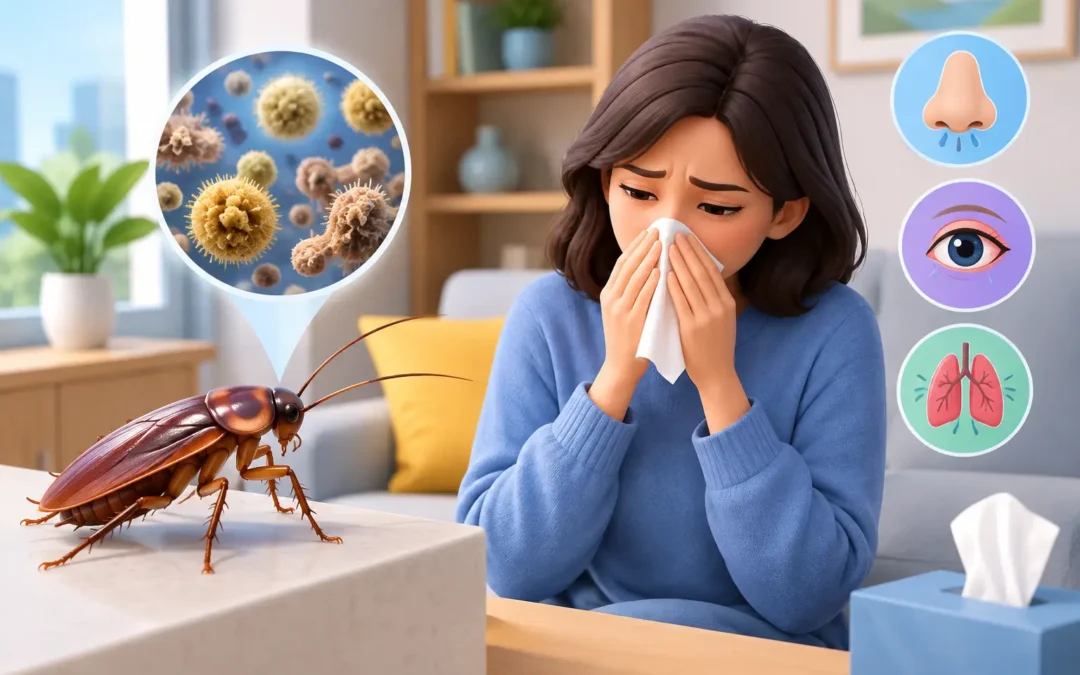
A cockroach seen racing across the kitchen at night is more than an unpleasant surprise. Cockroaches cause allergies because they leave behind proteins from their droppings, saliva, shed skins, and body parts. Those particles can become part of household dust, where they may trigger nasal allergies, skin reactions, and asthma symptoms long after the insect disappears.
For families, tenants, landlords, and business owners, this is a reason to act quickly. Cleaning helps reduce exposure, but it does not solve an active infestation hiding behind appliances, inside wall voids, or under cabinets. The goal is to remove the source, not just the evidence you can see.
How Cockroaches Cause Allergies in the Home
Cockroaches do not need to bite someone to create a health concern. Their allergens are tiny proteins that build up in places where roaches feed, travel, and nest. In a heavily infested unit, these particles can collect in kitchen dust, cupboard corners, bathroom cabinets, floor cracks, and upholstered furniture.
When someone sweeps, vacuums, opens a cabinet, or runs heating and cooling equipment, settled dust can move back into the air. A person with a sensitivity may then breathe in the allergens or get them on their skin. This is why a home can still feel irritating even when roaches are mostly active overnight and rarely seen during the day.
The risk is not identical in every property. One or two insects brought in with a grocery bag are not the same as an established population breeding near food, moisture, and warmth. But because cockroaches reproduce quickly, waiting to see whether the problem gets worse is usually an expensive gamble.
Symptoms That May Point to Cockroach Allergens
Cockroach allergy symptoms can look much like other indoor allergies. A person may have a runny or stuffy nose, sneezing, itchy or watery eyes, coughing, throat irritation, or itchy skin. Some people develop a rash after contact with contaminated surfaces or dust.
The bigger concern is asthma. Cockroach allergens are a recognized asthma trigger, particularly for children who already have asthma or other allergies. Wheezing, chest tightness, shortness of breath, nighttime coughing, or needing a rescue inhaler more often are warning signs that deserve medical attention.
Symptoms alone cannot prove cockroaches are the cause. Dust mites, pet dander, mold, pollen, and cleaning products can create similar reactions. Still, if symptoms get worse at home, around the kitchen or bathroom, or in a building with visible roach activity, cockroaches should be part of the investigation. An allergist can test for cockroach sensitivity, while a pest professional can identify where the infestation is coming from.
Children and people with asthma face greater exposure risks
Young children spend more time close to floors, may touch contaminated surfaces, and can be more affected by asthma triggers. Older adults and people with compromised respiratory health may also have a harder time when indoor air quality is poor.
That does not mean every household member will react the same way. Allergy response depends on sensitivity and the amount of allergen present. One person may have no obvious symptoms while another experiences persistent coughing or congestion. That difference is one reason property owners should not dismiss a cockroach problem simply because no one has seen a reaction yet.
Why Cleaning Alone Is Not Enough
A thorough cleanup matters, but it has limits. Wiping counters and taking out trash can remove food sources and some allergen residue. It cannot reliably reach roach harborages behind refrigerators, under dishwashers, inside electrical areas, beneath flooring, or in cracks around plumbing.
Store-bought sprays can also create problems when used without a plan. Spraying visible roaches may kill a few insects while pushing others deeper into walls or into neighboring rooms. Overuse can leave unnecessary pesticide residue in areas where children, pets, customers, or employees spend time.
The most effective approach is integrated pest management. It combines inspection, targeted treatment, sanitation guidance, exclusion work, and follow-up. The right treatment depends on the cockroach species, how widespread the activity is, the type of building, and whether adjacent units may be involved. A single-family home and a multi-unit apartment building rarely need the exact same plan.
Steps That Reduce Cockroach Allergens Now
If you have seen roaches, droppings that resemble black pepper or coffee grounds, egg cases, or a persistent musty odor, take action before the population spreads. Focus on reducing food, water, hiding places, and dust while arranging a professional inspection.
- Store food in sealed containers and clean crumbs, grease, and pet food spills promptly.
- Empty garbage regularly and use bins with tight-fitting lids.
- Repair dripping pipes, dry sinks overnight, and avoid leaving standing water in bathrooms or utility areas.
- Vacuum floors, cabinet edges, and cracks using a vacuum with good filtration, then seal and discard the vacuum contents outside.
- Wash hard surfaces with soap and water after roach activity is found, paying attention to cabinets, baseboards, and areas around appliances.
- Reduce cardboard, paper bags, clutter, and unused items that give cockroaches sheltered places to hide.
Do not rely on foggers or bug bombs. They often fail to reach hiding areas and may scatter roaches farther through a home or building. If asthma or allergies are already a concern, avoid disturbing large areas of contaminated dust without proper cleaning methods.
When Professional Cockroach Control Is the Right Move
Professional service is especially valuable when roaches are seen during daylight, activity continues after cleaning, multiple rooms are affected, or the property is a rental, restaurant, office, store, or multi-unit building. Daytime sightings can indicate overcrowding, meaning many more roaches are concealed nearby.
A qualified technician should inspect likely harborages, identify contributing conditions, and use targeted products where they will be most effective. Treatment may include baiting, crack-and-crevice applications, insect growth control, monitoring devices, and recommendations for sealing entry points. Eco-conscious treatment does not mean doing less. It means using a controlled, targeted strategy instead of indiscriminate spraying.
In apartment buildings and attached properties, communication matters. Cockroaches can travel through shared walls, pipe openings, hallways, and utility lines. Treating one unit without addressing nearby activity can lead to reinfestation. Tenants should report sightings promptly, and landlords or property managers should document service and coordinate access where needed.
Super Pest Control has completed more than 10,000 cockroach treatments and can help identify the source of activity before it becomes a larger health and sanitation issue. Fast inspection and targeted treatment are usually more affordable than repeated DIY purchases and ongoing damage to a property’s reputation.
Protecting Your Home After Treatment
Treatment works best when residents and technicians work from the same plan. Follow preparation instructions carefully, keep food and dishes protected as directed, and avoid moving bait or treated monitoring devices. It can be tempting to clean every treated crack immediately, but doing so may remove products before they have time to work.
After activity drops, continue the habits that make the property less attractive to roaches: clean food residue, control moisture, seal gaps around plumbing, and reduce clutter. In commercial spaces, regular cleaning schedules and staff reporting procedures can make a major difference. A single overlooked break-room spill or leaking utility sink can keep a small problem alive.
If anyone is having breathing trouble, severe wheezing, or a serious allergic reaction, seek medical care right away. Pest control removes an environmental trigger, but it does not replace a medical evaluation or an asthma treatment plan.
A cockroach infestation is not a sign that someone has failed to keep a clean home. Roaches enter through deliveries, shared building spaces, plumbing gaps, and everyday cracks. What matters is responding early, reducing allergen buildup, and getting the infestation under control before it keeps affecting the people who live or work there.