

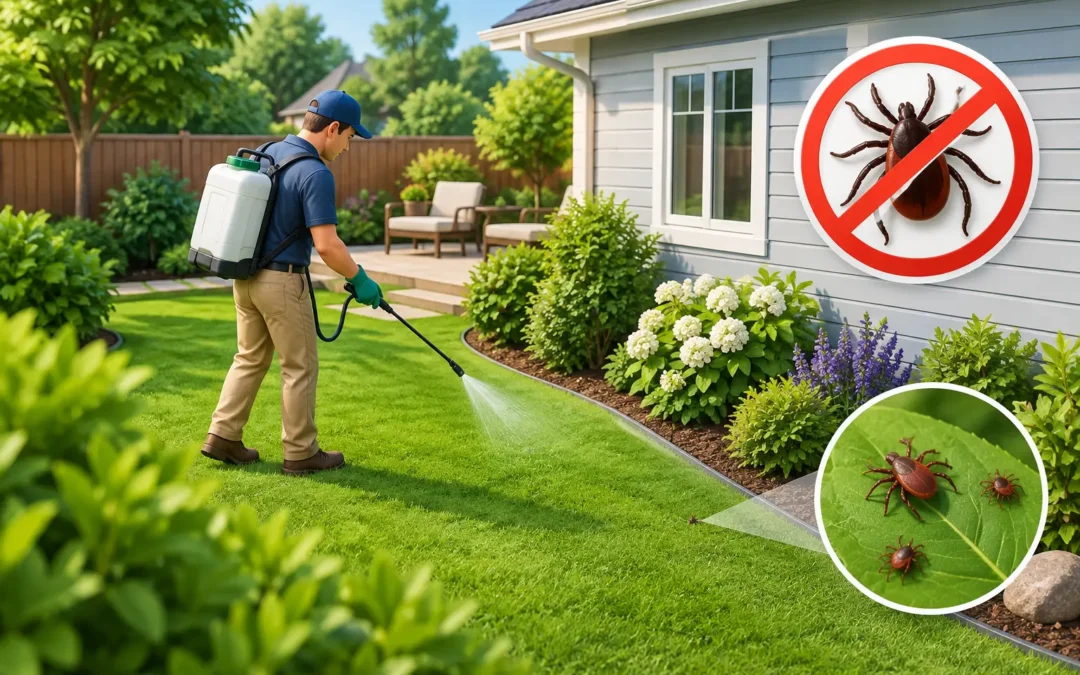
A tick crawling up a pant leg after ten minutes outside is not a small nuisance. It is a warning that your property may be giving ticks the shade, moisture, and animal activity they need to stay active. Effective tick control around your yard starts by changing those conditions, then treating the areas where people and pets are most likely to pick them up.
Ticks do not fly, jump, or fall from trees. They wait low in grass, leaf litter, brush, and overgrown edges, then grab onto a passing person, dog, cat, deer, mouse, or raccoon. That behavior makes targeted yard work and professional treatment far more useful than spraying every inch of the property.
Where Ticks Usually Hide
Most tick problems are strongest at the edges of a yard, not in the center of a clean, sunny lawn. Look closely along fence lines, woodpiles, stone walls, ornamental grasses, shrubs, wooded borders, and areas where leaves collect. These spots stay cooler and damper than open turf, which helps ticks avoid drying out.
Wildlife matters too. Deer can carry adult ticks through a property, while mice and other small rodents can support younger tick stages. Bird feeders, unsecured trash, fallen fruit, dense ground cover, and accessible pet food can all increase animal activity near the home.
A property does not need to back onto a forest to have ticks. A small suburban yard with a shady hedge, a leaf pile behind the shed, and a busy squirrel population can be enough. The goal is not to make your landscape bare. It is to make the places where your family walks, plays, and lets pets out less favorable for ticks.
Tick Control Around Your Yard Starts With Habitat Changes
The fastest low-cost improvement is regular mowing. Keep grass short, especially around play areas, paths, patios, dog runs, and the sides of sheds. Trim back vegetation that touches walkways or creates a thick, shaded tunnel between the lawn and a wooded edge.
Rake leaf litter promptly rather than allowing it to build up under shrubs or along fences. Stack firewood neatly in a dry, sunny area away from the house. If you use ground cover or mulch near a seating area, keep it thin and maintained instead of allowing it to become a damp layer of decomposing debris.
Create separation between high-risk edges and the spaces your household uses most. A clear, open strip of lawn, gravel, or wood chips between a wooded border and a patio can reduce the chance that ticks move directly into the activity area. Keep children’s play equipment, outdoor furniture, and pet resting spots away from brush and tall grass.
These changes will not eliminate every tick, particularly if deer and rodents move through regularly. They do reduce the places where ticks can survive and wait for a host. That makes any follow-up treatment more focused and more effective.
Do Not Forget Pets
Dogs often bring ticks closer to the house because they explore the exact places ticks prefer. Use veterinarian-recommended tick prevention consistently, check your pet after walks or backyard time, and wash pet bedding regularly. If a pet spends time under a deck, behind a shed, or in dense landscaping, inspect and improve that area first.
Avoid relying on a yard treatment alone to protect pets. Yard control lowers exposure, but it does not replace proper pet prevention. The same applies to people: repellents and tick checks still matter, especially after time near tall grass or wooded areas.
When Yard Treatment Makes Sense
A targeted tick treatment is often the right move when you have found ticks on people or pets, live beside woods or unmanaged land, or cannot realistically remove all favorable habitat. It can also make sense before a period of heavy outdoor use, such as when children are playing in the yard daily or a commercial property is preparing outdoor common areas.
Professional technicians focus treatment on likely tick zones: perimeter vegetation, shaded ornamental beds, brush, woodpiles, fence lines, and the transition between lawn and wooded cover. Treating these areas is usually more practical than applying product across an entire open lawn where ticks are less likely to be active.
Treatment timing depends on local conditions, weather, tick activity, and how quickly vegetation regrows. A single service may provide a meaningful reduction, but recurring service can be necessary when the property has ongoing wildlife pressure or dense neighboring vegetation. A reliable pest professional should explain what is being treated, why those zones were selected, and what results you can reasonably expect.
Be cautious with do-it-yourself pesticide applications. Applying too much product, treating the wrong surfaces, or spraying shortly before rain can waste money and create unnecessary exposure. “Natural” does not automatically mean effective or safe for every pet, child, pollinator, or water-adjacent property either. Read labels carefully and choose a treatment plan that fits the site.
Make the Yard Safer After Treatment
Once a treatment has been applied, follow the technician’s instructions about keeping children and pets out of treated areas until they are dry or for the stated re-entry period. Continue mowing, leaf removal, and trimming. Skipping the habitat work allows favorable tick conditions to return quickly.
Tick checks should become routine during tick season. Check behind the knees, around the waist, in the hairline, behind the ears, under the arms, and around socks and shoes. Showering after outdoor activity can help you spot ticks before they attach. Put outdoor clothes in a hot dryer when appropriate, since ticks can remain on fabric after a walk through brush or tall grass.
If you find an attached tick, remove it promptly with fine-tipped tweezers. Grip it close to the skin and pull upward with steady pressure. Do not burn it, cover it with petroleum jelly, or try to force it out with household remedies. Clean the bite area and monitor for symptoms such as rash, fever, fatigue, headache, or joint pain. Contact a healthcare provider if symptoms develop or if you have concerns about the bite.
Common Mistakes That Keep Tick Problems Going
Many homeowners spray the middle of the lawn and assume the job is done. But an open, sunny lawn is rarely the main tick hot spot. The shaded edges are where attention is needed.
Another mistake is cleaning the yard once and stopping. Ticks can return with wildlife, leaf litter can build up again, and vegetation can become overgrown within weeks. Tick prevention works best as a maintenance plan, not a one-time weekend project.
It is also easy to overlook nearby sources. An unmanaged lot, wooded ravine, trail, or neighbor’s dense brush can keep tick pressure high. You may not control that land, but you can strengthen the barrier on your side by maintaining the perimeter and treating the high-risk transition zones.
Get Help When Ticks Keep Returning
If ticks are appearing repeatedly on pets, family members, tenants, or customers, do not keep guessing at the source. A professional inspection can identify the landscape features, animal activity, and perimeter areas driving the problem. For homes and properties dealing with persistent tick activity, Super Pest Control provides practical, targeted pest management designed to reduce exposure without treating more of the property than necessary.
The best time to act is before the backyard becomes a place everyone avoids. Clear the edges, protect pets, check for ticks consistently, and bring in experienced help when activity continues. A safer yard is built through steady prevention, not wishful thinking.