

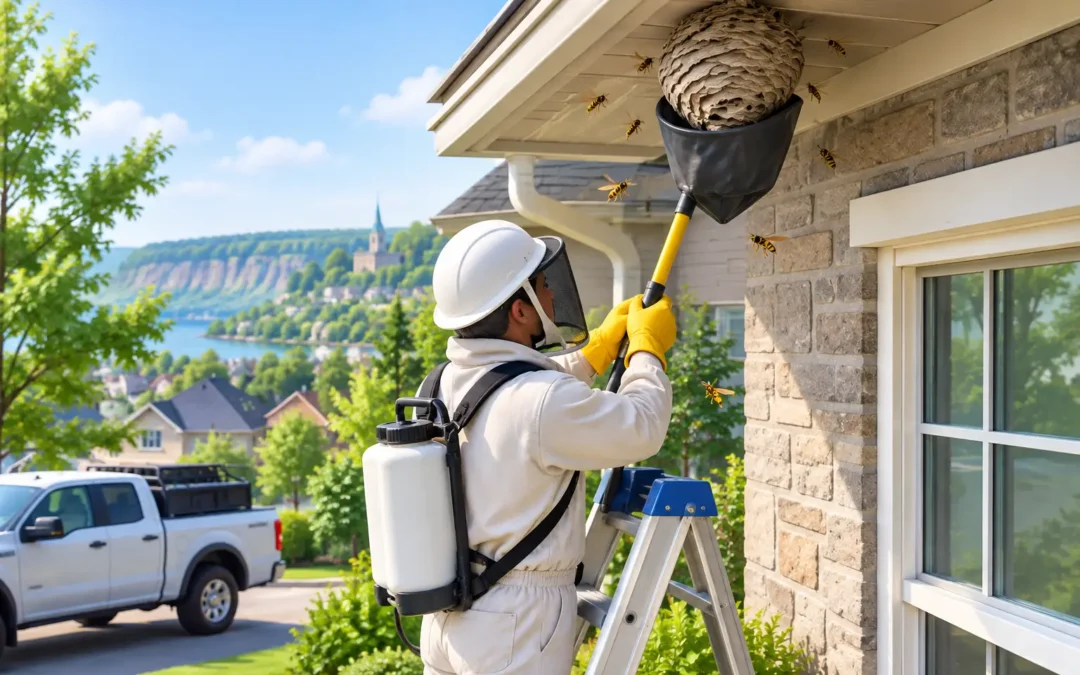
A nest under the eaves can turn a front door, deck, or backyard into a place nobody wants to use. Wasp nest removal Ancaster homeowners need is not a job to put off, especially when wasps are flying in and out of a wall, roofline, shed, or play area. A small nest can become a busy colony quickly, and disturbing it without the right treatment can lead to multiple stings.
The safest move is to keep people and pets away from the area and arrange professional treatment before the nest gets larger. Fast removal protects your household, prevents repeat activity around the property, and lets you use your outdoor space again without watching every buzzing insect overhead.
When a Wasp Nest Needs Professional Removal
Not every wasp flying through a yard means there is a nest on your property. Wasps may be feeding on flowers, garbage, fallen fruit, or outdoor food. The concern starts when you see repeated traffic to one exact spot. Watch from a distance for wasps entering a gap in siding, disappearing beneath shingles, or gathering around a visible paper nest.
Professional help is strongly recommended when the nest is close to doors, windows, decks, walkways, playground equipment, or outdoor work areas. It is also the right choice when the nest is in a wall void, attic, soffit, chimney, or other enclosed location. Spraying an opening yourself may agitate the colony without reaching the nest, leaving wasps trapped indoors or finding new exits into the home.
There is no safe reason to take chances if someone in the household has a known sting allergy. One sting can be serious for an allergic person, while a disturbed nest can expose everyone nearby to repeated stings. Property managers and business owners should act quickly as well. A nest near a tenant entrance, patio, delivery area, or customer walkway is a safety concern that should be handled promptly.
Common Nest Locations Around Ancaster Properties
Wasps choose protected, quiet locations that people often do not notice until activity increases. Open paper nests are commonly found under roof overhangs, porch ceilings, deck railings, sheds, fences, and dense shrubs. Ground-nesting yellowjackets may use old rodent holes, gaps beside patios, or loose soil near landscaping.
Some of the more difficult nests are hidden. A steady stream of insects entering a small crack around a vent, brick joint, fascia board, or siding panel can indicate a nest inside the structure. These cases require a careful approach. The goal is to treat the active colony effectively while preventing wasps from moving deeper into the building or entering living spaces.
Why Store-Bought Sprays Often Make the Problem Worse
Aerosol wasp sprays can work on a small, fully visible nest that is far from people. But that is a limited situation, and it comes with risk. Standing on a ladder while spraying an active nest is dangerous. So is treating a nest near an enclosed doorway or trying to knock it down with a broom, hose, or stick.
DIY products also have limits when the nest is concealed. You may kill a few foraging wasps while leaving the queen and most of the colony untouched. If the product is applied at the wrong time or from too close a distance, the wasps may swarm before you can get away. Covering entry holes right after spraying is another common mistake. It can force surviving wasps to search for an exit through interior walls, ceiling fixtures, or window frames.
Professional technicians identify the insect, locate the nest or entry point, and select a treatment method suited to the location. This matters because yellowjackets, paper wasps, hornets, and bees do not all behave the same way. Honey bees, for example, require a different response than aggressive stinging wasps. Accurate identification helps avoid unnecessary treatment and supports a safer result.
What Professional Wasp Nest Removal Looks Like
Effective wasp control begins with an inspection of the active area. A technician looks for flight patterns, visible nests, structural gaps, and conditions that may be attracting wasps. The treatment plan depends on whether the colony is exposed, underground, or inside a void.
For accessible nests, treatment is applied directly and the nest is removed when it is safe to do so. For hidden nests, the entry route is treated with the proper materials and technique so foraging wasps carry the treatment back into the colony. This approach is more controlled than soaking random exterior surfaces with spray.
Timing matters. Wasps are often less active later in the day, but each nest and property presents different conditions. A trained professional will not rely on a one-size-fits-all approach. They will consider nest placement, colony size, weather, access, nearby residents, and whether pets or children use the area.
After treatment, it is normal to see some activity as returning wasps encounter the treated area. Follow the technician’s instructions about avoiding the site and monitoring activity. If structural repairs or exclusion are needed, they should be completed at the right time – not while a live colony is still trying to exit through the opening.
Keep Your Property Less Attractive to Wasps
Nest removal resolves the immediate problem, but simple property maintenance can reduce the chance of another colony settling nearby. Wasps are drawn to available shelter, sugary food, protein, and water. Keeping outdoor garbage containers closed and cleaning spills after cookouts makes a meaningful difference during peak wasp season.
Check exterior features in spring and early summer, when small nests are easier to spot. Look beneath deck furniture, around sheds, under eaves, and behind shutters. Sealing obvious exterior gaps can help, but do not seal an opening with active wasp traffic. Have the colony treated first, then address the access point after activity has stopped.
Trim back heavy vegetation near entrances and keep fallen fruit cleaned up where possible. These steps will not guarantee that wasps stay away, but they remove common food sources and protected nesting spots. On larger properties, regular exterior inspections are especially useful around dumpsters, loading areas, patios, and tenant entrances.
Fast Wasp Nest Removal in Ancaster When It Cannot Wait
A wasp nest is not something to ignore until the season ends. Colonies can grow rapidly through summer, and activity often becomes more defensive when the nest is disturbed or food sources become limited. The sooner the issue is assessed, the easier it is to keep a small nest from becoming a major disruption.
Super Pest Control provides practical wasp treatment for homes, rental properties, and commercial spaces, with trained technicians, eco-friendly pest control options, and clear, competitive pricing. Whether the nest is hanging under a porch or hidden behind siding, the priority is safe treatment and fast relief.
Until help arrives, avoid swatting at wasps, mowing directly over a suspected ground nest, or blocking an active entry hole. Keep children, visitors, and pets away from the area. A prompt professional inspection gives you a clear answer, a safer property, and the confidence to use your space again.