

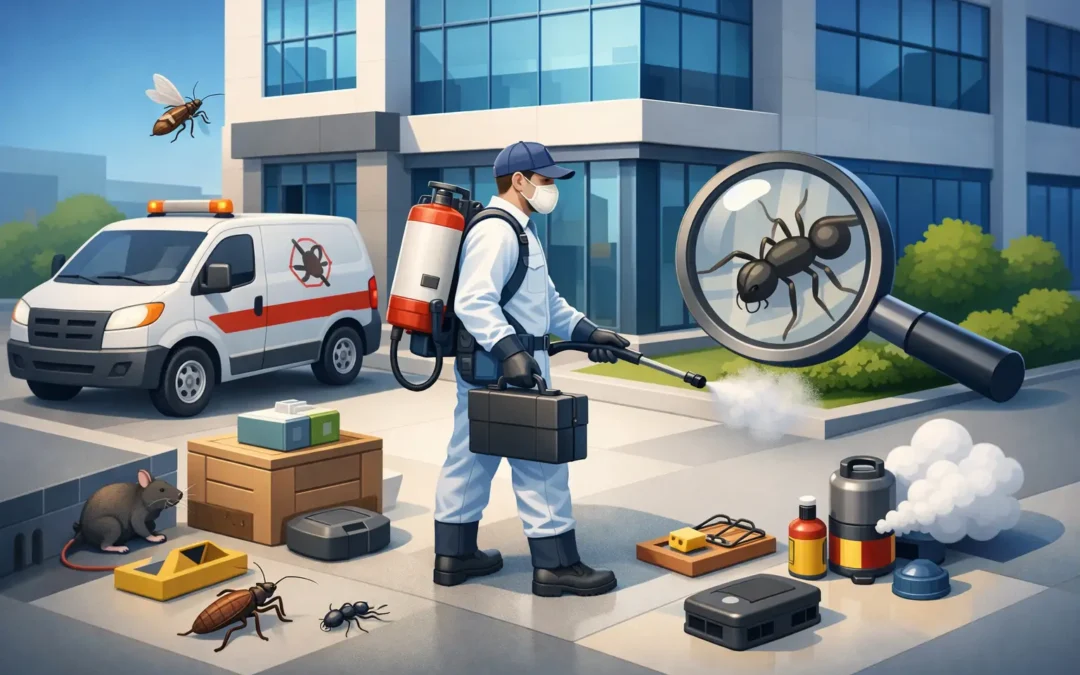
A customer spots a cockroach near a checkout counter. An employee hears rats moving above the ceiling tiles. A tenant reports bed bugs in a shared building. These are not minor inconveniences that can wait until next week. Commercial exterminator services help businesses stop active pest problems quickly while reducing the conditions that allow them to return.
For restaurants, offices, retail stores, warehouses, apartment buildings, and other workplaces, pest control is about more than removing what is visible. It protects employees, customers, inventory, inspections, and the reputation you have worked hard to build. The right response is fast, targeted, and backed by a practical prevention plan.
When a Commercial Pest Problem Needs Immediate Action
One pest sighting does not always mean a large infestation, but it is never a good reason to wait. Most pests are active where people do not look: behind equipment, inside wall voids, under shelving, around drains, in loading areas, or above suspended ceilings. By the time a mouse, roach, fly, or bed bug is seen during business hours, the problem may already be established.
Immediate professional service is especially important when pests affect food, customer-facing spaces, employee break rooms, rental units, or stock storage. Rodents can contaminate surfaces and damage wiring. Cockroaches can spread through tight cracks, appliances, and neighboring units. Flies can point to sanitation or drain issues. Bed bugs can create serious concerns in hotels, multi-unit properties, offices, and staff areas.
The cost of delay is rarely limited to the treatment itself. A single online review, failed inspection, damaged shipment, or tenant complaint can cost far more than calling a qualified exterminator at the first sign of activity.
What Commercial Exterminator Services Should Include
Effective commercial pest control is not a one-size-fits-all spray. Every property has different traffic patterns, sanitation challenges, structural gaps, and operating hours. A warehouse with frequent deliveries needs a different plan than a restaurant kitchen or a medical office.
A strong service starts with an inspection. A trained technician should identify the pest, locate activity, look for entry points, and determine what is supporting the infestation. That may include food debris, moisture, clutter, damaged door sweeps, gaps around utility lines, standing water, or improperly stored materials.
Treatment should then match the pest and the site. For example, cockroach control often requires targeted baiting, crack-and-crevice treatment, monitoring, and sanitation guidance. Rodent control may involve trapping, exclusion work, tamper-resistant stations, and follow-up inspections. Bed bug treatment may require a detailed room-by-room approach, preparation instructions, and scheduled rechecks.
The best plans also use integrated pest management. This means solving the source of the problem instead of relying only on repeated pesticide applications. Eco-friendly methods can be part of that approach, particularly when paired with exclusion, monitoring, sanitation improvements, and carefully selected treatments. The goal is effective control with minimal disruption to your staff, customers, and daily operations.
The Pests That Cause the Most Business Disruption
Commercial properties can attract a wide range of pests, but a few consistently create the most urgent calls. Rats and mice are common around dumpsters, receiving doors, kitchens, storage areas, and older buildings with gaps around pipes or foundations. They reproduce quickly, contaminate materials, and can damage insulation, wiring, and product packaging.
Cockroaches are another major concern, particularly in food service, multi-unit buildings, retail spaces, and break rooms. They can hide in extremely small spaces and move between units or departments through walls, plumbing openings, and shared utility areas. Quick action matters because a small roach issue can spread before staff realize how much activity is present.
Ants, flies, wasps, hornets, spiders, and occasional invaders such as centipedes can also disrupt operations. In some cases, the concern is customer comfort. In others, it is employee safety, especially where stinging insects are active near entrances, patios, delivery doors, or outdoor work areas.
Why Follow-Up Matters as Much as the First Visit
A treatment visit can stop visible activity, but pest control is not always finished when the technician leaves. Eggs may hatch after the first service. Rodents may find another entry point. A neighboring unit may remain untreated. Seasonal pressure can increase when weather changes.
That is why follow-up is not an optional add-on for many commercial infestations. It gives the technician a chance to confirm that treatment is working, adjust the plan if necessary, replace monitors or stations, and address new evidence before it turns into another emergency.
The appropriate schedule depends on the pest, industry, property size, and severity of activity. A restaurant or food-handling facility may need routine service and documented monitoring. A small office with a single ant issue may only need a short-term treatment plan plus sealing and housekeeping recommendations. A property manager dealing with recurring pests in several units may need coordinated service across affected areas.
There is a trade-off between the lowest upfront quote and the best long-term value. Cheap, one-visit treatments can be tempting, but they may not include inspection, proper materials, return visits, or the preventive work needed to keep pests away. Ask what is included, how follow-up is handled, and what your team needs to do between visits.
How to Prepare Your Business for Pest Treatment
Preparation helps treatments work faster and reduces interruptions. Your exterminator should provide clear instructions based on the pest and the treatment method. In most commercial settings, management should notify the right staff, make affected areas accessible, and protect or relocate food, exposed inventory, and sensitive equipment when instructed.
It also helps to assign one person as the point of contact. This avoids missed details and makes it easier to report new sightings, share maintenance concerns, and arrange access outside of busy business hours. For multi-unit properties, communication is particularly important. Treating one suite without addressing connected activity can lead to repeat problems.
After service, keep a simple log of sightings. Record the date, exact location, type of pest, and time of day. This is more useful than saying pests are appearing “everywhere.” A detailed sighting log helps identify patterns near a specific door, drain, dumpster, stockroom, or unit.
Choosing a Commercial Pest Control Provider
Your provider should be properly licensed, experienced with commercial environments, and able to explain the treatment plan in plain language. Look for a company that can respond quickly, especially if your business operates evenings, weekends, or long hours. A 24/7 contact option matters when pests show up before an inspection, a major event, or the next business day.
Experience with the specific pest also matters. Bed bugs, cockroaches, rodents, and stinging insects require different tools and inspection methods. Ask whether the provider uses integrated pest management, what safety steps are taken, and whether they offer practical prevention recommendations along with treatment.
Price should be clear from the start. A free estimate and competitive pricing are valuable, but a useful quote should also explain the scope of service. Know whether monitoring, exclusion recommendations, return visits, and emergency response are included. Super Pest Control provides commercial pest solutions built around prompt service, trained technicians, and practical treatment plans for active pest problems.
Protect the Business Before Pests Set the Schedule
Pests move fast when they find food, water, shelter, and access. Your response should move faster. Keep receiving areas clean, repair gaps and leaks, manage waste carefully, and report sightings as soon as they happen. When activity appears, professional help gives your business the best chance to solve the problem quietly, safely, and before customers notice it.