

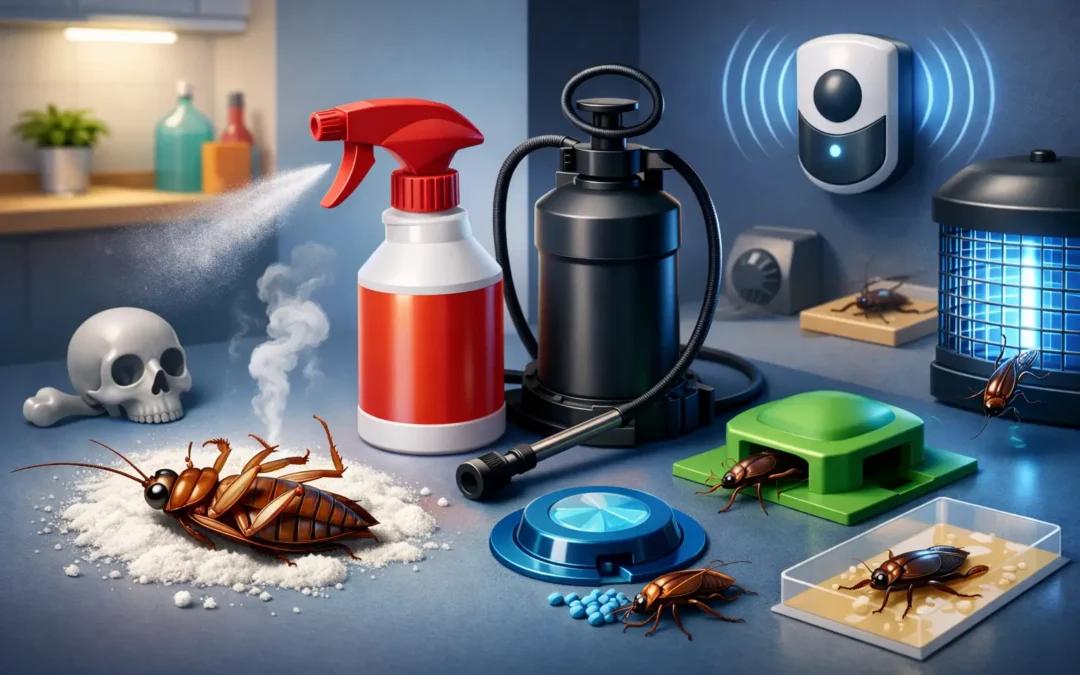
A cockroach can survive a lot, but an infestation does not survive a complete treatment plan. If you are asking what kills cockroaches permanently, the honest answer is not one spray, one trap, or one cleaning day. Permanent control comes from killing the active population, reaching the hidden nest, stopping reproduction, and removing the food, water, and entry points that let roaches return.
That is why a few dead roaches after using a store-bought aerosol can feel encouraging, then become frustrating a week later. The visible insects are only part of the problem. Cockroaches spend most of their time behind appliances, inside wall gaps, around plumbing, under cabinets, and in other warm, dark spaces near food and moisture.
What Kills Cockroaches Permanently?
The most reliable answer is a targeted combination of professional-grade bait, insect growth regulation, crack-and-crevice treatment, and prevention. Each part handles a different stage of the infestation.
Gel bait is often one of the strongest tools for established roach problems. Roaches eat the bait, travel back to their harborages, and can spread the active ingredient through the colony. This is far more effective than spraying every surface, which may only kill the insects you see and push the rest deeper into walls.
An insect growth regulator, often called an IGR, interrupts the cockroach life cycle. It prevents immature roaches from developing normally and reduces the population’s ability to reproduce. Bait kills active feeders. An IGR helps prevent the next generation from taking over after treatment.
Residual products placed carefully in cracks, voids, and travel routes provide another layer of control. These treatments should be applied where roaches hide and move, not broadly across countertops, dishes, or food-prep areas. Proper placement matters as much as the product itself.
For heavy infestations, a trained technician may also use targeted dust formulations in inaccessible wall voids, behind electrical areas, or beneath fixed cabinetry. These materials are not a DIY shortcut. Incorrect use can create unnecessary exposure risks or make the infestation harder to control.
Why foggers and random sprays usually fail
Bug bombs and foggers are popular because they promise a fast fix. In most cockroach situations, they are a poor long-term answer. The aerosol rarely penetrates into the narrow cracks where roaches nest. It can also scatter the colony, driving roaches into new rooms, wall voids, or neighboring units.
Repellent sprays can create the same problem when they are used around bait placements. If the roaches avoid the area, they may avoid the bait you need them to eat. A targeted treatment plan is more controlled, more effective, and usually less disruptive than repeatedly spraying visible bugs.
Eliminate the Conditions Roaches Need
Cockroaches do not need a dirty home to appear. They can enter in boxes, grocery bags, used appliances, deliveries, plumbing openings, and shared walls. But once inside, crumbs, grease, moisture, and clutter make it easier for them to establish a large population.
Start with the kitchen and bathroom. Wipe grease from the stove, backsplash, cabinet fronts, and floor edges. Vacuum crumbs from under appliances and inside drawers. Store dry food in sealed containers, keep pet food covered overnight, and do not leave dirty dishes in the sink.
Water control is just as important. Repair dripping faucets, check under sinks for slow leaks, dry standing water around drains, and avoid leaving wet sponges or dishcloths out overnight. German cockroaches, one of the most common indoor species, can survive on very small amounts of food and moisture. Removing both makes baiting and professional treatment work better.
Clutter reduction also helps. Cardboard, stacked paper, grocery bags, and crowded storage areas give roaches protected places to hide and breed. You do not need to empty your entire home in a panic, but clearing access around sinks, stoves, refrigerators, and cabinets allows treatment to reach the places that matter.
Seal the routes they use
After the active population is under control, exclusion helps prevent a repeat infestation. Seal gaps around plumbing lines, baseboards, cabinets, and wall penetrations. Add door sweeps where outside gaps are present and repair damaged window screens.
In apartments, condos, restaurants, offices, and multi-unit buildings, the issue may not be limited to one room or one suite. Roaches can move through utility lines, shared walls, hallways, garbage areas, and delivery zones. Treating one unit without addressing nearby activity can lead to reinfestation. Property managers and landlords should coordinate inspection and treatment across connected areas when signs point to a building-wide issue.
How Long Does It Take to Get Rid of Cockroaches?
A small, early infestation may show major improvement within days of a properly placed bait treatment. A larger infestation can take several weeks because eggs may hatch after the first service and hidden harborages may continue producing activity for a short time.
This does not mean treatment has failed. It means the life cycle has to be broken. You may see increased activity briefly after bait is introduced because roaches are feeding and moving through treated areas. Follow-up service is often the difference between temporary relief and lasting control.
Do not move bait placements, scrub treated cracks immediately, or spray over professional applications unless your technician tells you to. Continue normal cleaning on food-contact surfaces while leaving designated treatment zones undisturbed. A good pest control provider will explain exactly what to clean, what to avoid, and when to expect results.
Signs You Need Professional Cockroach Control
One cockroach does not always mean a major infestation, especially if it is an outdoor species that wandered inside. But repeated sightings, particularly during the day, should be taken seriously. Roaches are mostly nocturnal. Seeing them in daylight can mean the population is large enough that hiding spaces are crowded.
Other warning signs include small dark droppings resembling black pepper, shed skins, egg cases, a musty odor, or tiny roaches appearing around kitchen and bathroom cabinets. In restaurants, rental properties, healthcare settings, and food-handling businesses, waiting can create sanitation concerns and reputational damage quickly.
Professional service is especially worthwhile when you have tried sprays or traps without lasting results, live in a multi-unit property, see baby roaches, or find activity behind appliances and inside cabinets. An experienced technician can identify the species, locate harborages, use products safely, and build a plan around the way roaches are actually moving through the property.
Super Pest Control has completed more than 10,000 cockroach and bed bug treatments, using practical integrated pest management methods that focus on control at the source. For homeowners, tenants, landlords, and businesses, that means a treatment plan built around inspection, targeted application, follow-up, and prevention – not a quick spray-and-leave visit.
Do Home Remedies Kill Roaches for Good?
Some home methods can reduce a few roaches, but they rarely eliminate a breeding infestation. Sticky traps are useful for monitoring activity and identifying where roaches travel. They are not colony control. Boric acid can kill roaches when used correctly in very light, inaccessible applications, but visible piles are often avoided by roaches and can be unsafe around children and pets.
Baking soda, vinegar, essential oils, ultrasonic devices, and improvised mixtures are not dependable solutions for an established infestation. They may make a room smell different, but they do not reliably reach the nest, kill egg-producing females, or stop reinfestation.
The fastest route to lasting relief is to act while the problem is still manageable. Remove food and water sources tonight, avoid foggers, and arrange an inspection if you are seeing repeated activity. Cockroaches multiply quickly, but a targeted plan can stop them before a small sighting becomes a full infestation.