

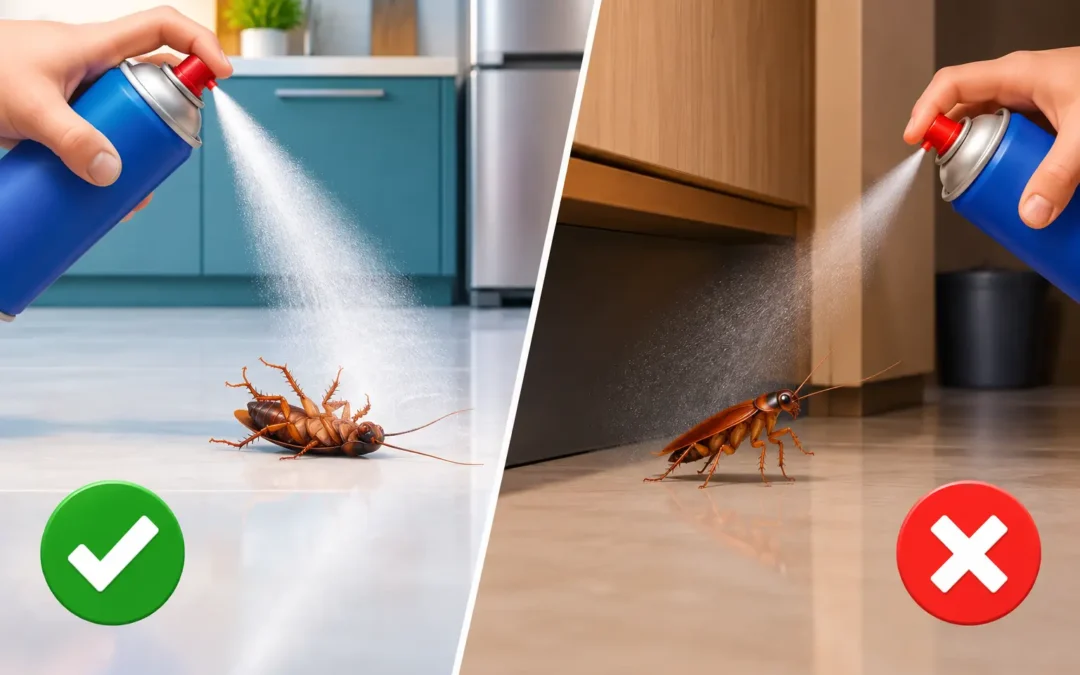
A cockroach running across the kitchen floor creates one immediate thought: get the roach spray. A quick spray can stop the insect you see, and that matters when roaches are active around food, counters, bathrooms, or customer areas. But killing a few visible roaches is not the same as eliminating an infestation.
Cockroaches spend most of their time hidden in cracks, behind appliances, inside cabinet gaps, around plumbing, and in wall voids. If you are seeing them during the day, finding droppings, spotting egg cases, or noticing more activity each week, the problem may be much larger than the roaches in front of you. The right response depends on the spray type, where it is used, and how established the infestation has become.
What Roach Spray Can Do
Contact sprays are designed for immediate knockdown. When sprayed directly on a cockroach, many products can kill or disable it quickly. This is useful when a roach appears unexpectedly in a kitchen, bathroom, basement, break room, or storage area.
Some sprays also leave a residual treatment on surfaces. Roaches that travel over the treated area may pick up the active ingredient later. Used carefully in tight cracks and likely travel routes, a residual product can reduce activity between more complete control measures.
The limitation is simple: spray only works where it reaches. A cockroach tucked behind a refrigerator motor, inside a wall gap, or below cabinet flooring may never contact the product. Eggs are another issue. Many common spray applications do not reliably eliminate egg cases, which means new nymphs can appear after the adults seem gone.
Why Roach Spray Often Fails
Spraying open floor areas, countertops, or the middle of a room rarely solves a cockroach problem. Roaches prefer protected edges and dark, narrow hiding places. They follow warmth, moisture, food residue, grease, clutter, and gaps around pipes. Treating the wrong place wastes product and can push roaches deeper into inaccessible spaces.
Overusing aerosol spray may also make bait less effective. Baits work because roaches feed on them and carry the control effect back to harborage areas. Strong-smelling sprays placed near bait stations can repel roaches from the bait, slowing down the result. This is one reason a professional treatment plan uses different products for different jobs instead of applying everything everywhere.
Resistance is a real concern as well. Cockroaches, especially German cockroaches, can develop resistance to commonly used insecticides. If a spray seems to stun roaches but activity returns quickly, the product may not be reaching the nest, the infestation may be growing faster than expected, or the roaches may not respond well to that active ingredient.
Choosing the Right Type of Roach Spray
Not all roach sprays are meant for the same situation. A contact aerosol is best reserved for the occasional visible roach. It offers fast relief, but it has limited reach into hidden harborages.
A crack-and-crevice product is more useful for targeted application around pipe penetrations, cabinet joints, appliance gaps, baseboards, and other concealed travel routes. Read the label closely. A product approved for cracks may not be approved for broad indoor surface treatment, food-contact surfaces, or use around certain pets.
Foggers and bug bombs are usually a poor choice for cockroaches. They send pesticide into the open air, while cockroaches remain sheltered behind walls, under appliances, and inside cabinetry. They can also spread residue over belongings without treating the exact spaces where roaches are nesting. For apartments, condos, restaurants, and commercial spaces, improper fogging can create avoidable safety and cleanup problems.
How to Use Roach Spray Safely
The label is the law for any pesticide product. Never assume more spray means better control. Applying extra product can create unnecessary exposure, leave residue where it does not belong, and still fail to reach the infestation source.
Before applying roach spray, remove or protect food, dishes, utensils, pet bowls, and children’s items from the treatment area. Keep people and pets away until the label says it is safe to return. Ventilate the space as directed, and avoid spraying electrical outlets, appliance motors, or areas where product could contact flames or food-preparation surfaces.
Focus on likely roach pathways rather than broad surfaces. Look behind the refrigerator and stove, under sinks, around dishwasher connections, in cabinet hinges, beside plumbing lines, near floor drains, and behind loose baseboards. A light, targeted application is usually more effective than soaking an area.
Do not combine products casually. Mixing insecticides, bleach, ammonia, or household cleaners can be hazardous and does not create a stronger treatment. If you clean treated surfaces immediately after application, you may also remove the residual protection before it has had time to work.
The Steps That Make Spray More Effective
Roach spray works better when the environment stops supporting roaches. Start by removing accessible food and water. Wipe grease and crumbs from kitchen surfaces, empty garbage regularly, store dry goods in sealed containers, and avoid leaving pet food out overnight. Repair leaking pipes and dry moisture around sinks, dishwashers, and bathroom fixtures.
Next, reduce hiding places. Cardboard, paper bags, cluttered storage areas, and loose cabinet liners give roaches protection close to food and moisture. Vacuuming along baseboards, beneath appliances, and inside cabinet corners can remove droppings, shed skins, and some egg cases. Empty the vacuum outdoors right away.
Seal gaps after active treatment has started. Caulk openings around pipes, repair damaged weather stripping, and close cracks where practical. In multi-unit buildings, this step is especially important because roaches can travel through shared walls, plumbing chases, and utility lines. One untreated unit can keep reintroducing cockroaches to another.
For an established infestation, gel bait, insect growth regulators, monitoring traps, sanitation, exclusion, and targeted spray treatments often work better together than any single product alone. This is integrated pest management: use the least disruptive effective combination, inspect results, and adjust the plan based on where the roaches are actually active.
Signs You Need Professional Cockroach Treatment
A single outdoor roach that wanders inside may not require a full treatment. Repeated sightings indoors are different. Call for professional help if you see roaches in daylight, find pepper-like droppings in drawers or cabinets, notice a musty odor, see small nymphs, or keep finding roaches after using store-bought products.
Businesses should act even faster. A cockroach sighting in a restaurant, office kitchen, retail back room, healthcare setting, or rental property can affect health standards, tenant confidence, and reputation. Waiting for the issue to become obvious usually increases the cost and complexity of control.
Professional technicians inspect the property before selecting treatment methods. They identify the roach species, locate harborage areas, assess moisture and entry points, and use products where they will have the greatest impact. That targeted approach is especially valuable for German cockroaches, which reproduce quickly and can spread through kitchens, bathrooms, appliances, and adjoining units.
Super Pest Control has completed more than 10,000 cockroach and bed bug treatments, using practical integrated pest management methods for homes and businesses. If roach activity is ongoing, a fast inspection and targeted treatment can prevent a small problem from becoming a building-wide infestation.
A can of spray is useful for the roach on the wall. For the roaches you cannot see, act before they have time to multiply: clean up food and moisture, avoid random spraying, and get expert help when the signs point to an active nest.