

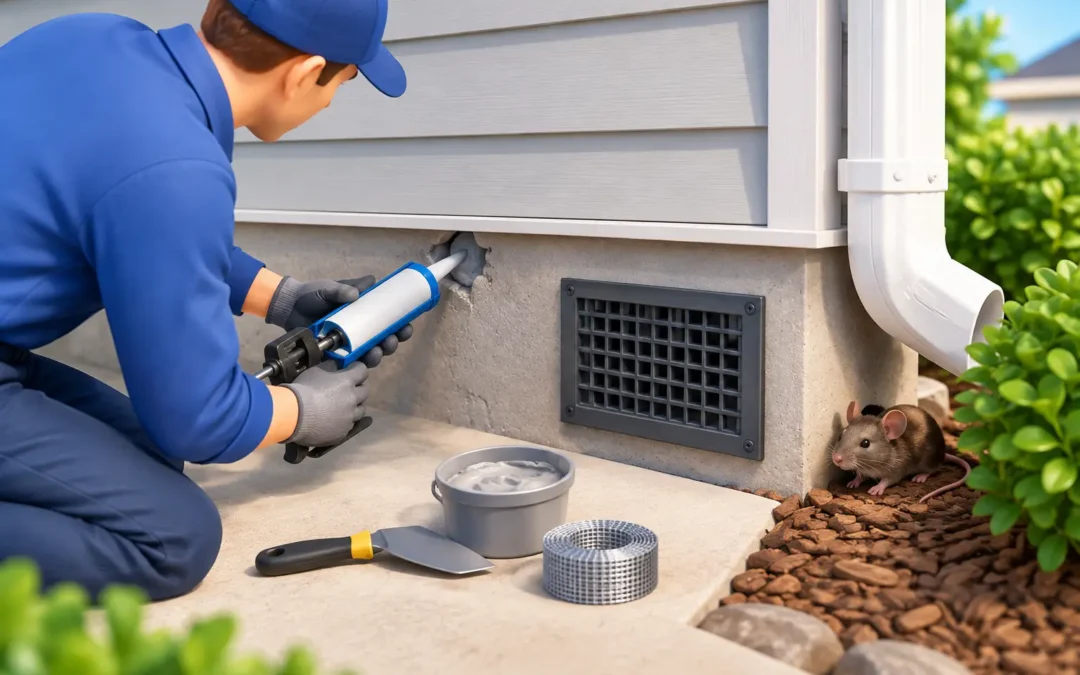
A mouse can enter through a gap as small as a dime. Young rats need only slightly more room. That is why setting traps without taking time to seal rodent entryways often leads to the same frustrating cycle: you remove one rodent, then hear scratching in the wall a few weeks later.
Rodent exclusion is the work that stops the repeat problem. It means finding the openings around your building, closing them with materials rodents cannot chew through, and correcting the conditions that keep attracting mice and rats. It is one of the most effective ways to protect a home, rental property, restaurant, office, or retail space from ongoing rodent activity.
Find the Entry Points Before You Seal Them
Do not start by filling every visible crack with foam. Mice and rats use the easiest routes, but the opening they use may be hidden behind a deck, appliance, shrub, utility line, or basement wall. A careful inspection prevents you from sealing the wrong area while an active route remains open nearby.
Walk the exterior slowly, starting at ground level and working upward. Look closely where different building materials meet, especially around foundations, brick joints, siding corners, rooflines, vents, pipes, cables, and doors. Pay extra attention to the side of the building near garbage storage, bird feeders, compost, dense landscaping, or outdoor pet food.
Common rodent entry points include:
- Gaps around plumbing, gas, electrical, cable, and HVAC lines
- Cracks in foundations, mortar, brick, and siding
- Damaged door sweeps, garage-door seals, and window screens
- Openings around dryer vents, exhaust vents, and soffits
- Unscreened chimney flues and roof vents
- Gaps where decks, porches, additions, or utility boxes meet the building
Inside, check under sinks, behind stoves and refrigerators, in utility rooms, around water heaters, and where pipes disappear into walls. Fresh droppings, greasy rub marks, shredded insulation, chewed materials, and a stale urine odor can point toward an active travel route.
Follow Evidence, Not Just Openings
Not every crack is a rodent entrance. A gap becomes more suspicious when it has gnaw marks, dark grease along the edge, disturbed insulation, or droppings nearby. Mice usually stay close to walls and move through quiet, protected spaces. Rats may leave larger droppings, stronger odor, and more obvious damage around basements, garages, crawl spaces, and garbage areas.
If you find significant droppings or nesting material, avoid sweeping or vacuuming it dry. Ventilate the area, wear gloves, and use an appropriate disinfectant before cleanup. Large amounts of waste, a dead rodent in a wall, or ongoing activity call for professional help.
Choose Materials Rodents Cannot Chew Through
Caulk alone is useful for thin cracks, but it is not a complete rodent barrier. Rodents can chew many sealants, expanding foam, rubber, plastic, and wood. The most reliable approach combines a chew-resistant material with a weatherproof finish.
For small holes around pipes or cables, pack the space with copper mesh or stainless-steel wool, then cover it with exterior-grade caulk. Copper mesh is preferable to ordinary steel wool because it does not rust as quickly. Use enough material to create a firm barrier, but do not compress or damage utility lines.
For larger gaps, use galvanized hardware cloth or metal flashing secured with screws, masonry fasteners, or appropriate construction adhesive. Hardware cloth with a quarter-inch mesh is a common choice for vents and larger openings because it allows airflow while blocking rodents. For foundation holes and damaged masonry, use mortar, cement patch, or a properly fitted metal patch rather than foam by itself.
Expanding foam has a place as a finishing material for drafts and minor gaps, but it should not be your only defense against mice or rats. If foam is exposed, rodents can often chew straight through it.
Protect Vents Without Blocking Airflow
Dryer vents, attic vents, roof vents, and crawl-space vents need airflow to prevent moisture problems. Never seal them shut. Instead, install a properly sized rodent-resistant cover or hardware cloth that does not interfere with the vent’s function.
Dryer vents require special care. Fine mesh can collect lint and create a fire risk, so use a dryer-specific pest guard designed to maintain airflow and clean it regularly. If the exterior flap is broken or does not close, replace it promptly.
Seal in the Right Order
Timing matters when you seal rodent entryways. Closing an opening while rodents are still using it can trap animals inside walls, ceilings, or crawl spaces. That may lead to more chewing, odor, or rodents forcing a new exit.
Start by addressing the most obvious exterior openings while setting monitoring devices or traps in active interior areas. Watch for fresh droppings, trap activity, or noises over several days. Once activity drops, complete the exclusion work and continue monitoring to confirm the building is clear.
This approach may differ when there is a large exterior hole leading directly into an occupied kitchen, storage room, or commercial space. In those cases, a trained technician can assess the risk, identify alternate exits, and create a plan that removes the rodents without causing a bigger problem inside.
Do Not Forget Doors, Garages, and Roof Access
Many rodent problems begin at a ground-level door rather than a dramatic hole in the foundation. If you can see daylight under an exterior door, the gap is large enough to deserve attention. Replace worn door sweeps, adjust loose thresholds, and repair damaged weatherstripping around side doors, patio doors, and garage doors.
Keep garage doors closed when possible, especially overnight. Garages often provide warmth, stored clutter, pet food, bird seed, and direct access to the house through utility penetrations. A small gap at the bottom corner is enough for a mouse to enter and begin exploring.
Trees, vines, stacked materials, and overflowing gutters can also give rodents access to upper levels. Trim branches away from the roofline, remove climbing vines from exterior walls, and keep storage at least several feet from the building. These changes do not replace sealing work, but they make the building less accessible.
Remove What Keeps Rodents Coming Back
Exclusion works best when food, water, and shelter are controlled at the same time. A tightly sealed building can still be challenged by rodents if garbage is exposed or food sources are easy to reach.
Store pantry items, pet food, and bird seed in hard-sided containers with secure lids. Clean crumbs under appliances, repair leaking pipes, and avoid leaving pet bowls out overnight. Outside, use garbage containers with tight-fitting lids and keep recycling areas clean. Remove fallen fruit, manage compost carefully, and reduce dense ground cover beside the building.
For landlords and property managers, consistent waste procedures matter as much as repairs. One overflowing dumpster or one tenant feeding wildlife can create a rodent pressure problem for an entire property.
When Professional Exclusion Is the Better Call
Some entry points are easy to repair. Others involve ladders, rooflines, crawl spaces, damaged foundations, shared walls, or active infestations that need immediate control. Commercial buildings also present challenges because delivery doors, utility rooms, food storage, and customer traffic create multiple entry opportunities.
Call a licensed pest control professional when you see repeated activity after DIY repairs, hear rodents in walls or ceilings, find extensive droppings, or cannot safely inspect likely access points. A proper exclusion inspection identifies both the visible hole and the conditions that allowed rodents to stay.
Super Pest Control combines rodent removal with practical exclusion recommendations, helping property owners stop the current activity and reduce the chance of another infestation. Fast action is especially valuable when mice or rats are contaminating food areas, damaging wiring, or affecting tenants and customers.
A sealed building is not about making every wall airtight. It is about closing the routes rodents use most, maintaining those repairs, and responding quickly when fresh evidence appears. Check vulnerable areas each season, especially after storms, renovations, or changes around the property, and small gaps are far less likely to turn into a major rodent problem.