

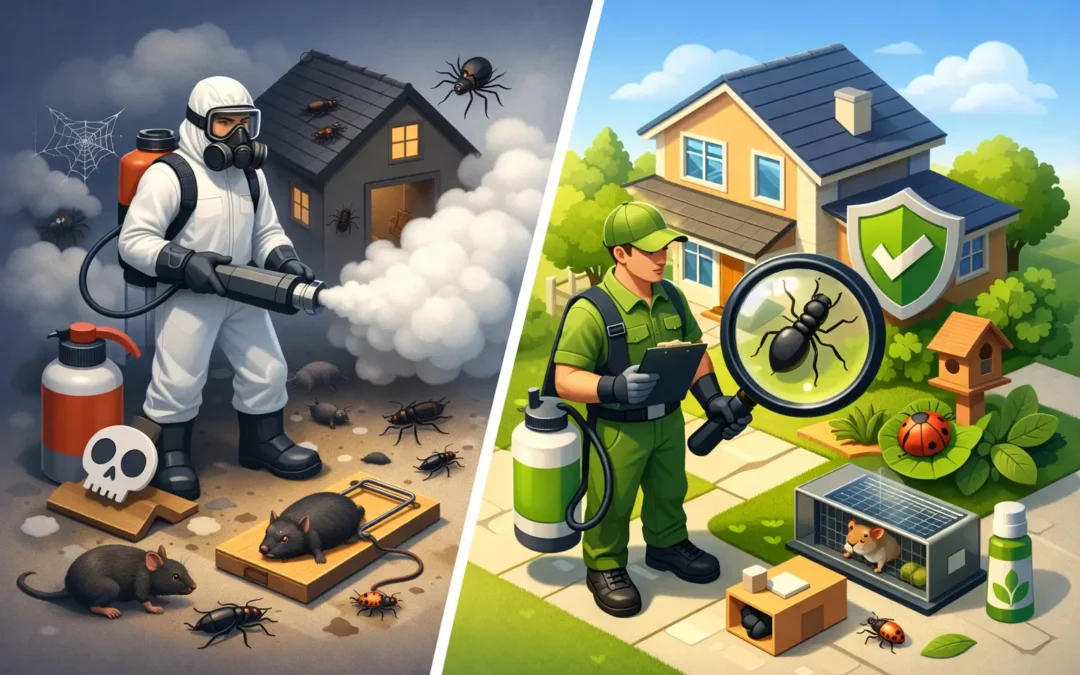
A mouse in the kitchen at midnight, cockroaches behind a restaurant refrigerator, or bed bugs in a rental unit is not a problem most people want to monitor for weeks. They want it gone. That is where the choice between extermination versus pest management matters. Both services target pests, but they solve the problem in different ways – and choosing the wrong approach can mean wasted money, repeat activity, and more stress.
Extermination is often the fastest answer to an active infestation. Pest management is the broader plan that addresses why the infestation happened and how to reduce the chance of it returning. For many homes and businesses, the best result is not one or the other. It is immediate treatment followed by practical prevention.
Extermination Versus Pest Management: The Core Difference
Extermination is focused on eliminating pests that are present now. A licensed technician identifies the pest, locates the activity, and applies an appropriate treatment to reduce or remove the infestation. This may involve targeted products, traps, baiting, removal methods, or a combination of treatments based on the pest and the property.
Pest management, often called integrated pest management, goes further. It combines treatment with inspection, monitoring, sanitation guidance, exclusion work, and follow-up recommendations. The goal is not simply to kill pests on contact. It is to make the property less appealing and less accessible to them.
Think of extermination as the urgent response and pest management as the long-term control plan. If you have wasps entering through a soffit, you need the nest treated safely. If the opening remains, new wasps may use the same area later. The treatment handles the immediate risk; the prevention step helps protect the property afterward.
When Extermination Is the Right Choice
Extermination makes sense when there is clear, active pest activity that needs fast attention. This is common with bed bugs, cockroaches, rats, mice, fleas, ants, wasps, hornets, and flies. In these cases, waiting can allow pests to spread, reproduce, contaminate food areas, damage materials, or disrupt daily life.
A focused extermination service is especially useful when the source is straightforward. For example, a visible wasp nest, a sudden ant trail near a food source, or rodents caught entering through a known gap may be resolved quickly with professional treatment and a few immediate corrections.
Speed is a major advantage. A trained technician can identify whether you are dealing with mice or rats, carpenter ants or pavement ants, bed bugs or another biting insect. That matters because the wrong do-it-yourself product often treats the symptom while leaving the real infestation untouched.
Extermination can also be the first priority in commercial spaces. Restaurants, retail stores, offices, rental buildings, and warehouses cannot afford to ignore pest sightings. Fast action helps limit customer complaints, employee concerns, product contamination, and reputation damage.
Still, extermination has a limit. If food, moisture, clutter, entry points, or nesting conditions remain unchanged, pests can return. That does not always mean the treatment failed. It can mean the environment continues to support pest activity.
When Pest Management Delivers Better Value
Pest management is usually the stronger choice for recurring problems, larger properties, sensitive environments, and situations where prevention matters as much as removal. Property managers dealing with repeated tenant complaints, for example, need more than a one-time spray. They need an organized plan that identifies activity patterns, building access points, sanitation concerns, and units requiring treatment.
For rodents, pest management is often essential. Trapping or baiting can reduce the population inside, but rats and mice can keep coming back through utility gaps, damaged vents, foundation openings, garage doors, and roofline access. Sealing entry points and controlling food sources are what turn temporary relief into lasting control.
Cockroach control also benefits from a management approach. Roaches hide in cracks, appliances, wall voids, and plumbing areas. They can spread through multi-unit properties and may survive when only the most visible areas are treated. Effective control may require bait placement, targeted crack-and-crevice work, sanitation improvements, monitoring, and follow-up service.
Bed bugs are another example. Professional treatment is necessary to eliminate an active infestation, but preparation, inspection, laundry procedures, clutter reduction, mattress protection, and follow-up checks help prevent missed bugs from rebuilding the population. A rushed, one-time response can be costly if the infestation returns.
Pest management is not about making a simple problem complicated. It is about using the right level of service for the conditions at your property.
The Trade-Off: Fast Relief vs. Lasting Prevention
The choice is not usually between a good service and a bad one. It is about matching the service to the problem.
A one-time extermination may cost less upfront and provide fast relief when the infestation is small or isolated. This can be appropriate for a single nest, a localized ant issue, or an early pest sighting with no history of repeat activity.
A pest management plan may require more inspection, more customer participation, and sometimes follow-up visits. That can mean a higher initial investment. However, it can reduce repeat infestations, emergency calls, product waste, and ongoing damage over time.
The most cost-effective option depends on the pest. It also depends on the property. A detached home with one mouse may need a very different approach than an apartment building with recurring roach activity or a restaurant with fly pressure near waste areas.
Be cautious of any provider that promises the same treatment for every pest. Effective pest control begins with correct identification and a clear inspection. Treatments should be targeted to the pest, the level of activity, the layout of the property, and the safety needs of people and pets.
What a Professional Inspection Should Cover
Before recommending extermination or ongoing pest management, a qualified technician should inspect the areas where pests live, travel, feed, or enter. This includes more than the room where you saw the problem.
For indoor pests, the inspection may include kitchens, bathrooms, basements, utility rooms, furniture, appliances, storage areas, and wall or floor gaps. For exterior activity, it may include foundations, eaves, garbage areas, landscaping, vents, rooflines, and exterior doors.
The technician should also look for contributing conditions. Moisture can attract centipedes, cockroaches, and other pests. Open food or overflowing garbage can support rodents and flies. Gaps around pipes, doors, and vents can provide easy access to insects and wildlife.
You should leave the inspection knowing what pest is present, where the activity is coming from, what treatment is recommended, what you need to do before or after service, and whether follow-up is necessary. Clear answers are a sign of a professional service, not an upsell.
How Eco-Friendly Pest Management Fits In
Eco-friendly pest control does not mean ignoring an infestation or relying on weak treatments. It means choosing targeted, responsible methods that reduce unnecessary exposure while still addressing the pest problem effectively.
Depending on the situation, this can include sealing entry points, removing attractants, using traps and monitoring devices, applying bait in controlled locations, treating precise harborage areas, and using the lowest practical amount of product needed. These methods are especially valuable in homes with children or pets, as well as schools, offices, and food-service environments.
For severe infestations, professional-grade treatment may still be needed. The responsible approach is to apply it correctly, explain the safety instructions clearly, and pair treatment with prevention so the property does not require repeated broad applications.
Choosing the Right Service for Your Property
If you are seeing pests for the first time and can identify an obvious source, fast extermination may be enough. If pests keep returning, you have multiple activity areas, or the issue affects tenants, customers, or employees, pest management is usually the smarter investment.
Ask whether the provider has experience with your specific pest, uses licensed technicians, explains the treatment plan, and offers practical prevention advice. Price matters, but the cheapest first visit can become expensive if it leaves the infestation behind.
For urgent pest problems in Hamilton, Burlington, Grimsby, Stoney Creek, or Ancaster, Super Pest Control can assess the activity, recommend the right treatment, and provide straightforward guidance on next steps. Whether the solution is immediate extermination, ongoing pest management, or both, the goal should be the same: get control of the problem now and keep your property protected after the pests are gone.