

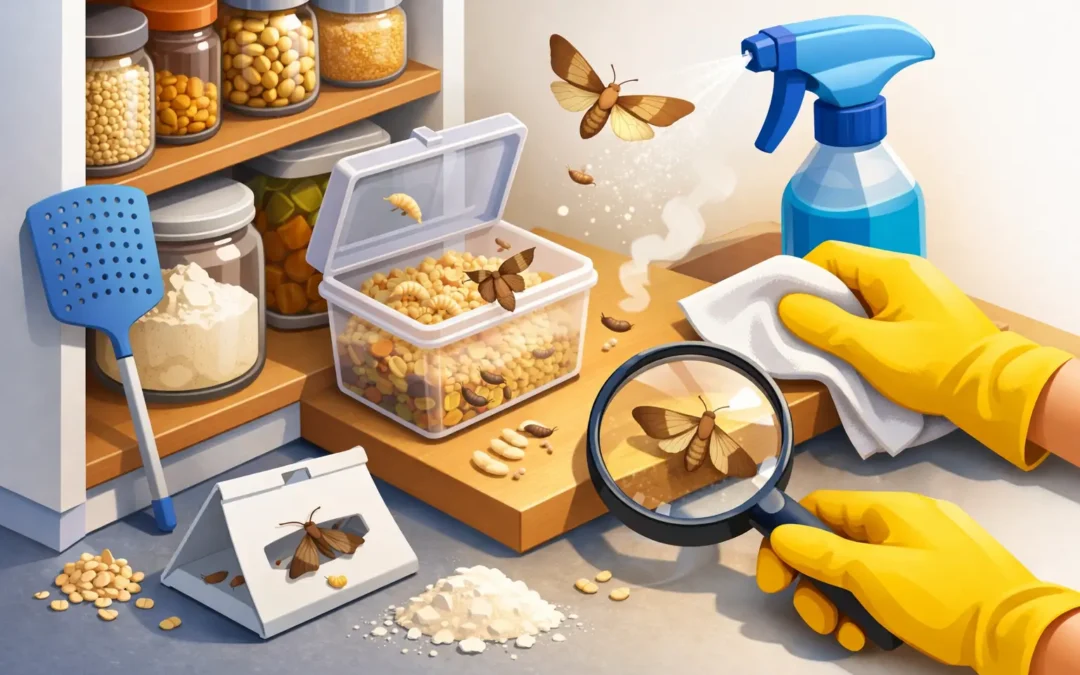
Seeing a small gray or brown moth flutter out of a cereal box is not a minor annoyance. It usually means eggs or larvae are already hiding in stored food nearby. Knowing how to get rid of pantry moths means finding the source, removing every contaminated item, and cleaning the pantry thoroughly before the next generation emerges.
Pantry moths can spread quickly through dry goods, including flour, rice, pasta, cereal, nuts, dried fruit, pet food, birdseed, spices, and baking mixes. Fast action protects your food supply and stops the infestation from moving into other cabinets.
Confirm You Are Dealing With Pantry Moths
The most common pantry pest is the Indian meal moth. Adult moths are small, usually about half an inch long, with wings that appear pale gray near the body and reddish-brown or coppery toward the tips. Adults do not damage food directly. The larvae do.
Look closely for cream-colored caterpillar-like larvae, webbing inside packages, clumped food, tiny cocoons on shelves, or larvae crawling along walls and cabinet corners. They often leave the food package to pupate, so finding a larva on the ceiling or in a nearby cupboard can still point to a pantry infestation.
Do not assume the visible bag of flour is the only problem. Pantry moths can enter unopened cardboard, paper, thin plastic, and loosely sealed packages. One overlooked box can restart the problem after you have cleaned everything else.
How to Get Rid of Pantry Moths Step by Step
The most effective treatment is removal and sanitation. Spraying insecticide around food storage areas is rarely the answer and can create an unnecessary food-safety concern. Start with the source.
Empty Every Shelf and Inspect All Dry Goods
Take everything out of the affected pantry, cabinet, and nearby food-storage areas. Check each package carefully, including items that look unopened. Focus on seams, folds, corners, and the inside of cardboard boxes.
Discard any food with moths, larvae, webbing, cocoons, or suspicious clumps. Place contaminated products directly into a sealed trash bag, tie it tightly, and take it outside right away. Leaving the bag in an indoor garbage can gives surviving larvae another chance to escape.
If you are unsure about an item, it is usually safer to throw it out. Pantry moth eggs are difficult to see, and keeping a questionable package to save a few dollars can prolong the infestation for weeks.
Some low-risk items may be saved if there is no evidence of activity and the packaging is fully intact. Freeze them for at least four days before transferring them to a clean, airtight container. Freezing kills eggs and larvae that may be present but invisible.
Vacuum Cracks, Corners, and Shelf Hardware
Vacuum the empty cabinet from top to bottom. Use a crevice tool around shelf supports, hinges, screw holes, trim, corners, and any gaps where larvae may hide. Pay attention to the underside of shelves and the upper corners of the pantry, where larvae commonly pupate.
Immediately empty the vacuum canister outdoors or seal and discard the vacuum bag. Do not leave collected debris inside the vacuum in your home.
After vacuuming, wash shelves and cabinet walls with hot, soapy water. A standard household cleaner can also be used on non-food-contact surfaces as directed on its label. Wipe everything dry before putting food back. Cleaning removes food residue that can support future pests, but it does not replace throwing out infested products.
Check Nearby Rooms and Non-Food Sources
Pantry moths do not always stay in one cabinet. Inspect adjacent cupboards, kitchen drawers, utility closets, and stored pet food. In apartments, condos, offices, and food businesses, inspect shared storage areas and receiving rooms as well.
Do not overlook decorative dried flowers, potpourri, rodent bait, birdseed, and bulk pet treats. These products can support pantry moth larvae just as easily as cereal or flour. If moths keep appearing after a major cleanup, an overlooked non-food item is often the reason.
Store Food So Moths Cannot Get Back In
Once the pantry is clean, replace cardboard boxes, bags, and thin plastic packaging with hard-sided airtight containers. Glass jars, metal containers, and heavy plastic containers with secure lids are all good options. Transfer flour, grains, pasta, snacks, baking ingredients, and pet food as soon as you bring them home.
This step does two jobs. It prevents moths from getting into clean food, and it contains an infestation if a product arrives with eggs already inside. Pantry moth problems often begin from a contaminated item purchased at a store, not from a dirty kitchen.
Buy dry goods in quantities you can use within a reasonable time. Large bulk purchases can save money, but they also sit longer and create more opportunity for pests to develop. If you keep bulk food, divide it into sealed containers or freeze it for several days after purchase as an added precaution.
Keep shelves free of crumbs and food spills, especially under appliances and in corners. A clean pantry alone will not stop moths if infested food remains, but regular cleaning makes early signs much easier to spot.
Use Pantry Moth Traps the Right Way
Pheromone traps attract adult male pantry moths. They are useful for monitoring activity and helping confirm whether moths are still present. Place traps near the affected pantry area, following the label instructions.
Traps are not a stand-alone cure. They do not remove eggs, larvae, or female moths already in food packages. Treat them as an early-warning tool after you have removed contaminated food and cleaned the area.
Avoid placing several traps throughout a small kitchen. Too many can attract moths from a wider area toward your home. One properly placed trap is usually enough for monitoring a typical residential pantry.
Why Pantry Moths Keep Coming Back
A pantry moth life cycle can take several weeks, depending on temperature and available food. This means you may see a few adult moths after cleaning, even if you removed the main source. Continue monitoring for at least six to eight weeks.
If activity continues beyond that period, inspect again. The common causes are one missed package, food stored in a garage or basement, pet food, or larvae pupating in an overlooked crack. In multi-unit properties and commercial settings, the source may also be in another storage area that has not been inspected.
Do not rely on essential oils, mothballs, or random aerosol sprays. Strong scents may make a pantry unpleasant to use, while mothballs are not intended for open food-storage spaces. Professional-grade pest control works best when paired with source removal and proper food storage.
When to Call a Pantry Moth Professional
A homeowner can often solve a small pantry moth problem with careful disposal, cleaning, and airtight storage. Call for professional help when moths keep returning, the infestation has spread into multiple rooms, or you manage a rental property, restaurant, retail store, or other business where food contamination can affect customers and operations.
A trained technician can inspect storage zones that are easy to miss, identify whether the insect is truly a pantry moth, and recommend an integrated treatment plan that protects people, pets, and food. For homes and businesses in Hamilton, Burlington, Grimsby, Stoney Creek, and Ancaster, Super Pest Control provides fast inspections and practical pest solutions backed by experienced technicians.
The fastest relief comes from being thorough once, rather than cleaning the same pantry repeatedly. Remove suspect food, clean every hidden edge, seal what remains, and keep watching for activity until the moth life cycle is broken.