

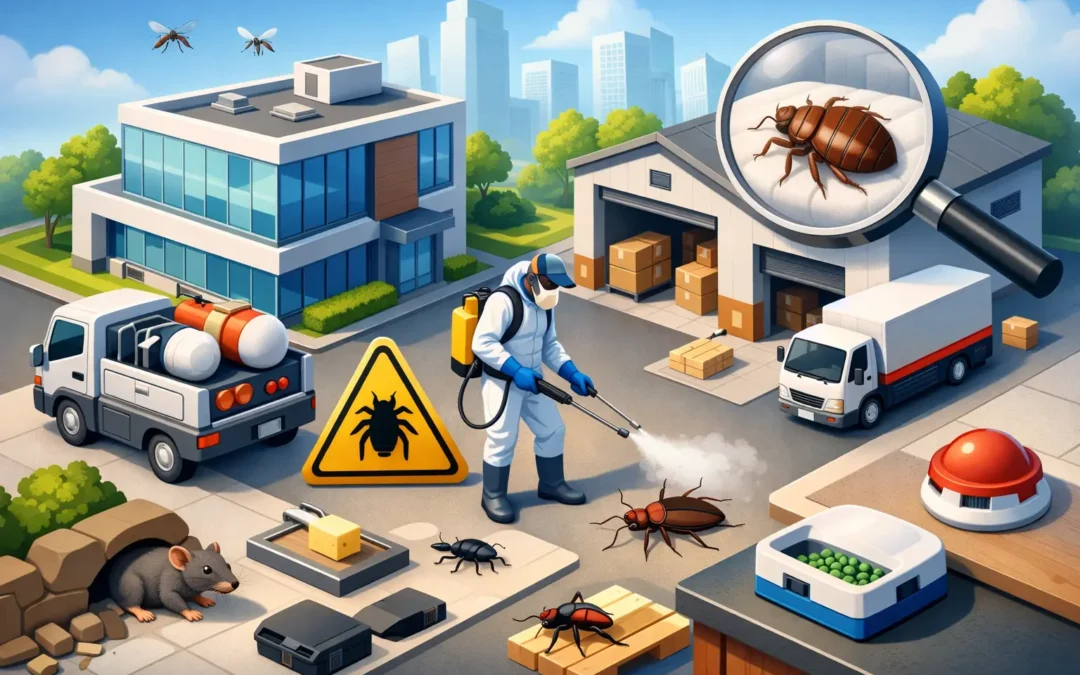
A single cockroach near a customer table, mouse droppings in a stockroom, or flies around a prep area can quickly become a complaint, failed inspection, or lost account. This commercial pest management guide explains how businesses can respond to active pest issues quickly while building prevention into daily operations.
For restaurants, offices, warehouses, retail stores, apartment buildings, and healthcare facilities, pest control is not a once-a-year maintenance task. It is an ongoing risk-management job. The right approach protects people, inventory, property, and your reputation without disrupting business more than necessary.
Start With Fast Identification and Containment
Commercial pest problems get expensive when staff wait to see whether the issue goes away. Most do not. Rats, mice, cockroaches, bed bugs, flies, ants, and stored-product pests reproduce or spread while the original source remains available.
The first step is to identify what you are dealing with and where activity is concentrated. A mouse in a loading area requires a different response than cockroaches behind a dishwasher or bed bugs in a multi-unit rental property. Ask staff to document the location, time, pest sightings, droppings, damage, odors, and any customer complaints. Clear details help a technician inspect faster and avoid treating the wrong area.
Containment should begin immediately. Remove exposed food, isolate affected inventory when appropriate, clean spills, empty overflowing garbage, and restrict access to heavily affected rooms. Do not move infested furniture, boxes, linens, or equipment through the building unless a pest professional advises it. Moving items can spread bed bugs, cockroaches, or stored-product pests into clean areas.
Know When an Issue Is Urgent
Some problems should be treated as an immediate service call. Rodent activity in food storage or electrical areas, stinging insects near entrances, cockroaches in kitchens, and bed bugs in hotels, rentals, or employee break areas can escalate quickly. A pest sighting in a customer-facing space may also require a same-day response to limit reputational damage.
Fast treatment matters, but so does accurate treatment. Spraying an over-the-counter product without locating nesting areas, entry points, or sanitation issues can scatter pests and make the infestation harder to control.
Build a Commercial Pest Management Plan
The strongest commercial pest control programs use integrated pest management, often called IPM. This means combining inspection, sanitation, exclusion, monitoring, and targeted treatment instead of relying on repeated blanket pesticide applications.
A practical plan starts with an inspection of the entire property, not just the spot where a pest was seen. Technicians should check utility rooms, kitchens, floor drains, drop ceilings, receiving areas, dumpsters, loading docks, wall voids, storage racks, landscaping near the building, and neighboring units when relevant.
From there, assign responsibility. Management should know who approves service, who communicates with the pest control provider, and who verifies that sanitation or repair recommendations are completed. Staff need simple reporting instructions: what to report, where to report it, and why it should be reported immediately.
A good plan also includes a service schedule based on your risk level. A low-traffic office may need periodic monitoring and preventive visits. A restaurant, grocery operation, multi-family building, warehouse, or property with frequent deliveries may need more frequent inspections. It depends on food sources, foot traffic, building age, nearby construction, waste handling, and the history of pest activity.
Fix the Conditions That Attract Pests
Treatment is only one side of pest management. Pests stay where they can find food, water, warmth, shelter, and easy access.
Keep food in sealed containers, clean under equipment, and avoid leaving employee snacks in desks or lockers overnight. Repair leaking pipes, sweating refrigeration lines, and damaged drain covers. Clean floor drains on a scheduled basis, especially in food service and janitorial areas. Outside, keep dumpster lids closed, remove standing water, and keep vegetation trimmed away from the building.
Exclusion is equally important. Seal gaps around pipes, utility lines, doors, vents, and foundation openings. Install door sweeps where daylight shows beneath exterior doors. Rodents can enter through surprisingly small openings, while cockroaches and ants often use cracks around plumbing and wall penetrations.
Pest-Specific Risks in Commercial Buildings
Different pests create different operational risks. Knowing the likely source helps you act with purpose rather than treating every problem the same way.
Rodents
Rats and mice contaminate food, damage packaging, chew wiring, and create fire risks. They often enter near receiving doors, docks, garbage areas, and utility openings. Evidence includes droppings, grease marks along walls, gnaw marks, shredded nesting material, and scratching sounds after hours.
Rodent control usually requires trapping, exclusion, sanitation improvements, and exterior monitoring. Poison alone is rarely a complete solution and can create odor problems if rodents die inside wall voids.
Cockroaches
Cockroaches thrive where there is moisture, grease, clutter, and warm hiding places. Commercial kitchens, break rooms, apartment units, laundry rooms, and mechanical spaces are common hotspots. Seeing roaches during the day can signal a larger population because they usually avoid light and activity.
Effective cockroach control often involves detailed crack-and-crevice treatment, baiting, monitoring, deep cleaning, and follow-up visits. In shared buildings, adjacent units or suites may need inspection because pests can travel through plumbing and wall openings.
Flies and Drain Pests
Flies are not just a nuisance around customers. They can point to sanitation problems, damaged screens, overflowing waste, or organic buildup in drains. Fruit flies may be tied to produce, beverage stations, or recycling. Drain flies are often linked to slime buildup inside drain lines.
The fix depends on the species. Flying insect treatments may reduce adults, but cleaning the breeding source is what stops the cycle.
Bed Bugs
Hotels, shelters, rental properties, offices with upholstered furniture, and multi-unit housing can all face bed bug issues. Bed bugs do not indicate poor cleanliness. They travel in luggage, furniture, clothing, and personal belongings.
Do not tell occupants to throw away everything or move items into hallways. A professional inspection and a clear preparation plan are safer and more effective. Treatment may include targeted applications, heat, monitoring, and repeat service depending on the level of activity.
Protect Customers, Staff, and Your Reputation
A calm, organized response protects trust. Train managers and front-line staff not to speculate, argue with customers, or make promises they cannot keep. If a concern is reported, thank the person, remove the immediate issue if possible, document the location, and notify the person responsible for pest management.
Keep service records, inspection findings, treatment reports, monitoring logs, and repair documentation. These records help demonstrate that your business acted promptly and followed a prevention plan. They are especially useful for food-related operations, property managers, and businesses subject to health or compliance inspections.
Choose a pest control provider that understands commercial schedules and can explain what happens next. You need clear recommendations, treatments appropriate for the setting, follow-up when needed, and a technician who communicates with your team. Eco-friendly pest control should still be effective – it means using targeted, responsible methods and prevention first, not ignoring a serious infestation.
Avoid the Most Common Commercial Pest Control Mistakes
The biggest mistake is treating pests as a maintenance inconvenience instead of an operational issue. Waiting for a weekly meeting, hiding evidence before an inspection, or relying on staff to handle an infestation with store-bought products can turn a small problem into a shutdown-level event.
Another mistake is focusing only on the interior. Pests often begin outside at dumpsters, landscaping, gaps around the building, or loading areas. Finally, do not skip follow-up. Eggs hatch, seasonal pressure changes, and new deliveries can restart activity even after a successful initial treatment.
If you manage a business in Hamilton, Burlington, Grimsby, Stoney Creek, or Ancaster, Super Pest Control can provide experienced commercial inspections, targeted treatments, and practical prevention advice when fast action is needed.
The best time to address a commercial pest problem is when the first sign appears. Document it, contain it, correct the conditions that support it, and get qualified help before pests have time to affect the people who rely on your business.