

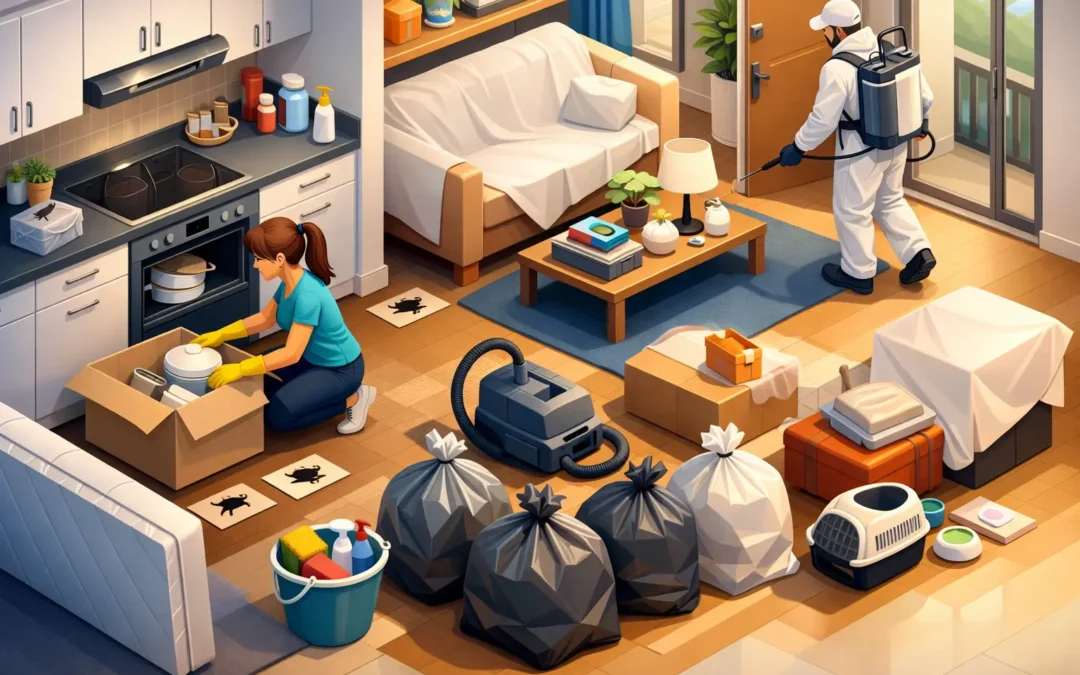
Cockroaches do not stay in one obvious place. They hide behind refrigerators, inside cabinet hinges, under sinks, around plumbing lines, and in small cracks near heat and moisture. That is why knowing how to prepare apartment for cockroach treatment matters. Proper preparation gives your pest control technician access to the places roaches use most and helps the treatment work faster.
You do not need to throw away everything you own or turn your apartment upside down. The goal is simple: remove food sources, reduce clutter, protect personal items, and make key areas accessible. Follow the instructions from your technician first, since preparation can vary based on the treatment method and the severity of the infestation.
Start by Confirming What Treatment You Are Receiving
Ask whether your appointment involves gel bait, targeted liquid application, dust treatment, crack-and-crevice service, or a combination of methods. Preparation is not identical for every service.
For example, gel bait works best when cockroaches have fewer competing food sources. A heavy cleaning before treatment can help. However, do not apply store-bought sprays, foggers, or strong cleaning chemicals in areas your technician plans to bait. These products can repel roaches from bait or reduce its effectiveness.
If your building management has arranged treatment, confirm whether the technician needs access to all rooms, only the kitchen and bathroom, or adjacent units as well. In an apartment building, cockroaches can travel through shared walls, plumbing openings, utility lines, and hallways. Treating one unit without addressing active neighboring activity may slow results.
Clear Food and Kitchen Surfaces
The kitchen is usually the highest-priority room. German cockroaches, the most common indoor roach in apartments, thrive where food, grease, water, and warm appliances are available.
Put all open food into sealed containers or the refrigerator. This includes bread, cereal, snacks, fruit, pet food, coffee, spices, and cooking ingredients. Wipe crumbs from counters, tables, stovetops, and inside drawers. Take out the trash and replace the bag with a clean one.
You do not always need to empty every cabinet completely, but cabinets with visible roach activity should be cleared if your technician requests it. Remove items from under the sink and from lower cabinets near the stove, dishwasher, or refrigerator. Place dishes, cookware, and pantry items in sealed bins or large bags away from the treatment area.
Do not leave dirty dishes in the sink. Even a small amount of food residue can keep roaches active around an untreated feeding source rather than moving toward bait placements.
Pull Appliances Away From the Wall When Possible
Cockroaches often nest behind refrigerators and stoves because these areas are dark, warm, and rarely disturbed. If you can safely move appliances a few inches away from the wall, do so before the appointment. This creates room for the technician to inspect and treat behind and beneath them.
Do not risk injury or damage trying to move a heavy appliance alone. If you cannot move it, tell the technician. They can explain what access is needed and whether assistance is available.
Prepare Bathrooms and Plumbing Areas
Bathrooms offer roaches moisture, especially around leaking pipes, drains, tubs, and toilet bases. Empty the vanity cabinet, remove bath mats, and clear toiletries from the counter if treatment is planned in those areas.
Check under sinks for leaks or standing water. A pest treatment can reduce the infestation, but a constant water source makes long-term control harder. Report plumbing leaks to your landlord or property manager promptly. In rental apartments, this is not just a housekeeping issue. Building repairs are often necessary to stop cockroaches from returning.
Keep drains clean and avoid leaving wet sponges, damp towels, or water-filled cups overnight. Small changes like these remove the conditions that help roaches survive between visits.
Reduce Clutter Without Spreading Roaches
Clutter creates hiding places and makes it difficult to inspect walls, floors, closets, and furniture. Focus on the areas where you have seen roaches, droppings, egg cases, or a musty odor. Clear bags, cardboard, paper stacks, unused boxes, and loose items from floors, especially in the kitchen, bathroom, and laundry area.
Be careful with cardboard. Cockroaches can hide in the folds and feed on glue. If you need storage, use plastic bins with secure lids instead of keeping piles of boxes in the apartment.
Avoid moving infested belongings into another room without checking them. A stack of papers or a small appliance can carry roaches and egg cases to a new area. Bag items before moving them, and ask your technician if anything needs inspection before it is stored, discarded, or taken to another property.
Make Baseboards, Corners, and Cabinets Accessible
Your technician needs a clear path to likely hiding places. Move furniture about 12 to 18 inches away from walls where practical, particularly in rooms with visible activity. Clear the floor along kitchen baseboards, behind trash cans, under sinks, and around heating units.
Open cabinet doors and drawers in affected areas unless you are instructed otherwise. Remove liners that are loose, greasy, or heavily soiled. Cockroach droppings often collect in drawer tracks, cabinet corners, and under shelf liners. Vacuum these areas carefully, then immediately seal and discard the vacuum contents outside.
Do not caulk cracks, seal pipe openings, or make repairs immediately before the technician arrives unless you have been told to do so. The technician may need to inspect these entry points first. Once active areas are treated, sealing gaps around pipes, baseboards, and wall openings is one of the best ways to limit future movement.
Protect Children, Pets, and Sensitive Items
Follow the technician’s safety instructions about leaving the apartment during treatment and returning afterward. The required wait time depends on the products and application method used. If you have infants, children, pets, fish tanks, birds, or respiratory sensitivities, mention this before service begins.
Cover or remove pet food and water bowls. Fish tanks may need to be covered, with air pumps turned off during certain applications. Birds are especially sensitive to airborne products, so they may need to be removed from the apartment. Your technician can give product-specific guidance.
Store toothbrushes, medications, baby items, and food-preparation tools away from treatment areas. If treatment is applied inside cabinets or drawers, wait for the technician’s instructions before putting these items back.
Tell Your Technician What You Have Seen
The fastest service begins with accurate information. Point out where you see live cockroaches, how often you see them, and whether activity is worse at night. Mention small roaches, larger roaches, droppings that resemble black pepper, shed skins, or brown egg cases.
Also be honest about any products already used. Store-bought sprays, traps, boric acid, foggers, and bait stations can affect where cockroaches hide and how they respond to professional treatment. This information helps the technician choose the right approach instead of guessing.
If you are a tenant, document the issue with photos and notify your landlord or property manager in writing. Roaches can move between units, and shared building conditions may need attention. If you are a landlord or property manager, arrange access to nearby units when there is evidence of widespread activity.
What to Do After the Treatment
Do not expect every cockroach to disappear the same day. Baits are designed to be carried back to hiding places, and eggs already present may hatch after the first service. It is common to see some activity during the days following treatment, especially in a significant infestation.
Keep the apartment clean, dry, and free of exposed food. Do not scrub treated cracks, cabinet corners, or baseboards unless your technician tells you to. Continue using sealed food containers, empty trash regularly, and report leaks quickly.
Most successful cockroach control depends on follow-up. If activity continues, contact the pest control company rather than adding random sprays. Experienced technicians can reassess the apartment, identify missed harborages, and adjust the treatment plan. Super Pest Control provides practical cockroach service for apartments and multi-unit properties, with trained technicians focused on targeted treatment and lasting control.
A prepared apartment gives the treatment its best chance to work. Clear the access points, remove the food and water roaches rely on, and follow the post-treatment instructions closely. That combination is what turns a one-time visit into real relief from cockroaches.