

You usually do not get a clear warning with bed bugs. It starts with a few itchy bites, a tiny rust-colored stain on the sheet, or a feeling that something is off around the bed. If you are wondering how to spot early bed bug signs, the key is to look for a pattern, not just one clue. Catching them early can mean less spread, lower treatment costs, and a much better chance of getting the problem under control quickly.
Bed bugs are small, flat insects that hide close to where people sleep or rest. In the early stage, they are easy to miss because they stay tucked into tight cracks and usually come out at night. That is why many people mistake the first signs for dry skin, mosquito bites, or random stains. The sooner you recognize what you are seeing, the sooner you can stop them from moving deeper into the home.
How to spot early bed bug signs in your home
The earliest signs usually show up in three places – on your body, on your bedding, and around the seams and edges of furniture. None of these signs alone proves an infestation, but when two or three appear together, bed bugs move much higher on the list.
Bites are often the first thing people notice. They may look like small, red, itchy welts, sometimes grouped in a line or cluster. But bites are tricky. Some people react strongly, while others show almost nothing at all. Pets, allergies, and other insects can also cause similar marks. So bites should raise suspicion, not settle the question.
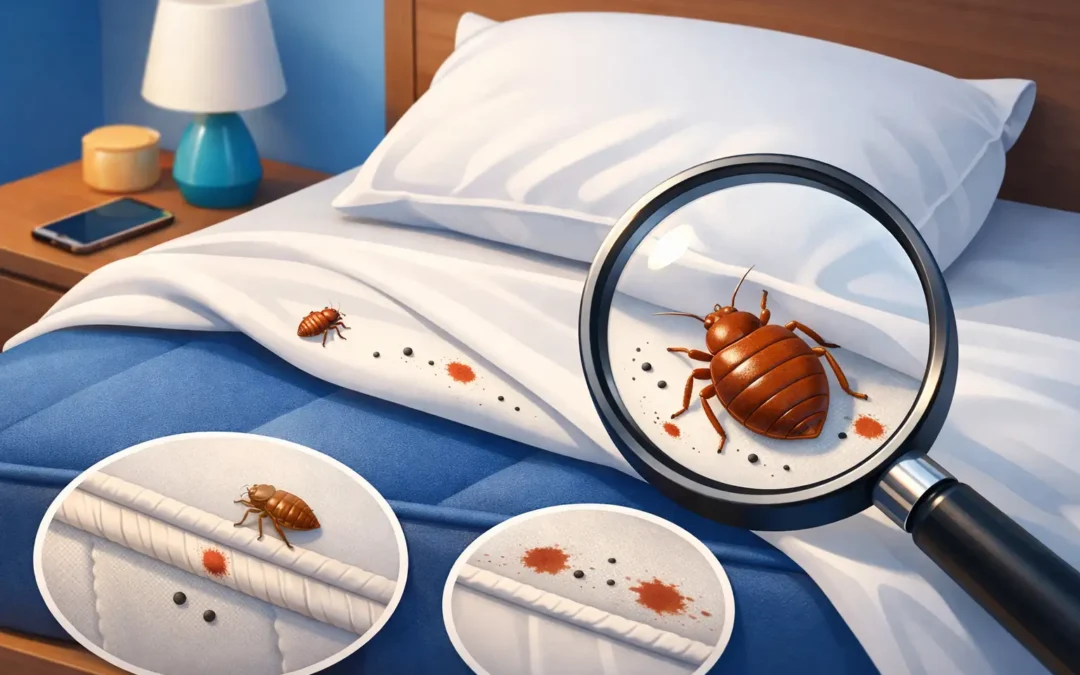
Sheets and pillowcases can tell you more. Look for tiny rusty or reddish smears, which can happen when a fed bed bug is crushed during sleep. You may also see tiny dark specks that look like pepper or ink dots. Those spots can be bed bug droppings. They tend to appear near mattress seams, fitted sheet corners, and the edge where your body usually rests.
The third area is the furniture itself. Early infestations often stay close to the bed, especially in mattress seams, box spring folds, bed frame joints, and headboard cracks. If you shine a flashlight into these areas, you may find pale shed skins, dark spotting, or even live bugs about the size of an apple seed. Younger bed bugs are smaller and lighter, so they can be harder to see.
What bed bug evidence actually looks like
People often expect to find a lot of bugs right away. That is not how early infestations usually look. In the beginning, the evidence is subtle and easy to brush off.
Live bed bugs are flat and oval before feeding, then more swollen afterward. Adults are brown to reddish-brown. Young bed bugs, called nymphs, can look pale yellow or almost translucent. Eggs are tiny, white, and hard to spot without close inspection.
Fecal spots are one of the more reliable signs. They are small, dark, and often soak into fabric like a marker dot. On wood or painted surfaces, they may appear as black pinpoints clustered near a crack or seam. Shed skins look like thin, pale shells left behind as the bugs grow. If you see a combination of black spotting, shell-like skins, and small blood smears near a sleeping area, that is a strong warning sign.
There can also be a smell, but usually not at the start. Larger infestations may produce a sweet, musty odor. If you notice that scent, the problem is often no longer early.
Where to check first
Start where people spend the most time sitting or sleeping. Bed bugs like to stay close to a host, so they usually hide within a few feet of the bed in the early stage.
Check the mattress piping, labels, handles, and seams. Lift the mattress and inspect the underside. Look closely at the box spring, especially under the fabric edge and around staples. Examine the bed frame joints, screw holes, slats, and headboard mounting points. If the headboard is attached to the wall, inspect behind it.
Then move outward. Nightstands, upholstered chairs, sofas, baseboards, curtain folds, and even nearby electrical outlet covers can become hiding spots. In apartments and multi-unit housing, bed bugs can also move between units through wall voids and shared spaces. That means a very clean home can still end up with bed bugs. This is not a sanitation issue. It is a hitchhiking pest issue.
Travel items deserve special attention. Luggage, backpacks, purses, and clothing piles near the bed can become transfer points. If the problem started after travel, a hotel stay, buying used furniture, or moving items from another property, your odds go up.
Signs on couches and chairs
Not every early infestation starts in a bed. In homes with frequent napping, long movie nights, or overnight guests in living areas, bed bugs may first show up in sofas or recliners. Look along seat cushions, under cushion zippers, around welting, and inside the frame where fabric is stapled.
This matters for landlords and property managers too. Tenants sometimes report bites but never find signs on the bed because the bugs are centered in a couch or padded chair nearby.
Common mistakes that delay treatment
The biggest mistake is waiting for proof that feels obvious. People often keep checking for weeks because they want to see a bug in broad daylight. By then, the infestation may have spread to more rooms.
Another mistake is relying only on bites. Some people never react, while others react days later. In shared homes, one person may be covered in bites while another shows none. That can lead to arguments about whether the problem is real when the bugs are already established.
People also confuse bed bugs with fleas. Flea bites tend to cluster around ankles and lower legs, while bed bug bites often appear on exposed skin such as arms, shoulders, neck, and back. But there is overlap, so the environment matters. If you are seeing dark specks in mattress seams, that points away from fleas.
DIY sprays can make things harder if used too soon and in the wrong places. Bed bugs often scatter deeper into walls, furniture, and adjacent rooms when they are disturbed. Quick action is smart, but random action is not.
What to do if you find early bed bug signs
If you suspect bed bugs, avoid moving bedding, clothing, or furniture into other rooms unless the items are sealed first. That is how a bedroom problem becomes a whole-house problem.
Take clear photos of any stains, shells, or bugs you find. Keep one sample if possible by sealing it in a small container or plastic bag. Reduce clutter around the bed so inspection and treatment are easier. Wash bedding and clothing from the affected room in hot water and dry on high heat, then store cleaned items in sealed bags or bins until the problem is confirmed and treated.
Do not throw out the mattress right away. In many cases, that creates unnecessary cost and spreads bugs through hallways or shared spaces. A proper inspection should come first.
For homeowners, tenants, and property managers, speed matters. Early infestations are usually more contained, which can make treatment more straightforward and less disruptive. Experienced pest control companies know where to inspect, how to confirm activity, and how to treat without guesswork. That is especially important in high-turnover housing, apartments, and commercial properties where bed bugs can spread fast.
When to call a professional
Call for help if you find live bugs, repeated blood spots, multiple fecal marks, or ongoing bites with no other explanation. You should also act quickly if the property has shared walls, frequent guests, employee traffic, or recent travel exposure.
A professional inspection can save time because early signs are easy to misread. Trained technicians know how to separate bed bug evidence from lint, dirt, carpet beetle skins, and other look-alikes. Companies with strong bed bug treatment experience, licensed technicians, and practical follow-up plans usually give you the fastest path to control.
If you are in Hamilton, Burlington, Grimsby, Stoney Creek, or Ancaster, local response time can make a real difference when the issue is still small.
Bed bugs rarely announce themselves loudly at first. They leave hints – a bite pattern, dark specks, tiny stains, and hidden activity near where people rest. If those hints are starting to add up, trust what you are seeing and act while the problem is still easier to contain.